

A damaged sewer line does not automatically mean the entire pipe needs to be replaced. The right solution depends on where the damage is located, how severe it is, what condition the surrounding pipe is in, and whether the problem can be reached and repaired effectively.
Dirt Cheap Sewer provides sewer line repair and replacement services for Bellevue homeowners and property owners dealing with broken pipes, recurring backups, root intrusion, displaced joints, collapsed sections, and other structural sewer problems.
The process starts by identifying what is actually happening underground. From there, we can determine whether a localized repair, trenchless solution, pipe replacement, or conventional excavation makes the most sense for the condition of the line.
Does My Bellevue Sewer Line Need to Be Repaired or Replaced?
A sewer line generally needs repair when a specific damaged section can be corrected without replacing the rest of a serviceable pipe. Replacement may be more appropriate when deterioration is extensive, the line has collapsed, structural problems occur throughout the pipe, or repeated repairs would not provide a practical long-term solution.
That distinction is important.
A sewer backup tells you that wastewater is not moving through the system properly. It does not tell you why. A blockage caused by grease, debris, or other removable material may require cleaning rather than structural repair. Roots entering through a failed joint may indicate a damaged section of pipe. A collapsed or badly deteriorated line may require considerably more extensive work.
Before deciding how much of the sewer line needs to be repaired, the underlying problem should be identified as accurately as possible.
Signs Your Sewer Line May Need Repair
Not every slow drain is evidence of a broken sewer line. When several symptoms occur together or the same problem repeatedly returns, however, the sewer itself may need closer attention.
Common warning signs include:
- Sewer backups that return after previous cleaning
- Multiple drains becoming slow at the same time
- Toilets bubbling or gurgling when other fixtures drain
- Sewage odors inside or around the property
- Water backing up through lower-level drains
- Roots repeatedly entering the sewer line
- Cracks or separated pipe joints found during an inspection
- Sections of sewer pipe that have shifted or become misaligned
- A visible sag or low section that repeatedly collects waste
- A partially or completely collapsed pipe
- Recurring blockages in the same part of the sewer
- Unexplained wet or unusually soft areas along the sewer route
The important word in many of these situations is recurring.
Clearing an obstruction restores flow, but it does not necessarily correct the condition that caused the obstruction. If roots return through the same damaged joint or debris repeatedly collects around a displaced section of pipe, the long-term solution may involve repairing the sewer itself.
Find the Cause Before Choosing the Repair
Sewer work should begin with diagnosis rather than assumptions.
When the condition of the line is not already known, a sewer camera inspection can provide a much clearer view of what is happening inside the pipe. Depending on access and conditions, an inspection may reveal problems such as:
- Root intrusion
- Cracks
- Broken pipe
- Offset or separated joints
- Corrosion or deterioration
- Accumulated debris
- Bellied or sagging sections
- Partial collapse
- Complete collapse
Locating the problem also helps determine how much pipe may actually need attention.
Repair the Problem — Not More of the Line Than Necessary
Finding one defective section does not automatically mean the entire sewer needs replacement.
If most of the pipe remains structurally sound, a localized repair may be possible. If damage extends through a substantial portion of the sewer, replacing more of the line may provide a more practical solution.
The condition of the pipe—not simply the inconvenience caused by the current backup—should guide that decision.
Sewer Line Repair Options for Bellevue Properties
There is no single repair method that is right for every sewer line.
The appropriate approach depends on factors including the pipe material, depth, route, structural condition, access, type of damage, and condition of the surrounding area.
After evaluating the sewer, Dirt Cheap Sewer can discuss which of the available approaches may be practical for the property.
Localized Sewer Line Repair
When damage is confined to a specific area and the surrounding pipe remains usable, it may be possible to expose and repair only the affected section.
Localized repair can be appropriate for defects such as a broken fitting, severely displaced joint, or isolated damaged segment.
The goal is simple: correct the structural defect without replacing functioning pipe unnecessarily.
Trenchless Sewer Repair or Replacement
Some sewer lines may qualify for trenchless methods that reduce the amount of open excavation needed to reach or replace the pipe.
Depending on the existing sewer and the type of damage, options may include pipe bursting, lining, or another appropriate trenchless technique.
Trenchless work is not automatically suitable for every sewer. Pipe condition, alignment, access, collapse, and other site conditions can determine whether a trenchless method is practical.
Conventional Sewer Excavation
Open excavation remains an important sewer-repair method.
If the pipe has collapsed, changed alignment substantially, requires direct access, or cannot practically be rehabilitated using a trenchless method, excavating the affected area may be necessary.
Conventional excavation also provides direct access to the pipe, which can be valuable when the sewer needs to be physically removed, repositioned, or replaced.
Full or Partial Sewer Replacement
If deterioration extends beyond one isolated defect, replacing a larger section—or potentially the affected sewer line—may make more sense than repeatedly repairing individual failures.
A replacement recommendation should be based on what the inspection shows about the overall condition of the pipe.
When Sewer Repair May Be the Better Choice
Repair may be appropriate when:
- The problem is limited to one section
- Most of the sewer remains structurally sound
- The damaged area can be accessed effectively
- The defect can be corrected without leaving significant unresolved problems
- Replacement would involve removing functioning pipe without a clear benefit
A targeted repair can address a genuine structural problem while limiting unnecessary work.
When Sewer Replacement May Make More Sense
Replacement may become the better option when:
- Damage exists in multiple sections
- The pipe has significantly deteriorated
- Part of the sewer has collapsed
- Joints are failing repeatedly
- Root intrusion is associated with widespread pipe failure
- Previous repairs have not resolved the underlying problem
- The existing line cannot practically support the proposed repair method
The decision should be based on the condition of the sewer as a system rather than one isolated symptom.
How Sewer Line Repair and Replacement Works
Every property presents different conditions, but a typical sewer-repair project begins with identifying the problem and narrowing down the available solutions.
1. Evaluate the Symptoms
Tell us what has been happening.
Has the sewer backed up more than once? Was the line recently cleaned? Have roots been removed before? Has another contractor already performed a camera inspection?
Previous history can provide useful clues about whether the problem is a one-time obstruction or a recurring structural issue.
2. Inspect and Locate the Problem
When necessary, the sewer line is inspected to identify the condition and location of the defect.
This is where the difference between cleaning, repairing, and replacing becomes much clearer.
3. Determine Which Repair Methods Are Practical
Once the condition of the sewer is understood, the next step is determining what can realistically be done.
That may include:
- Spot repair
- Partial replacement
- Trenchless rehabilitation
- Pipe bursting
- Conventional excavation
- More extensive sewer replacement
Not every option will be appropriate for every property.
4. Explain the Recommended Approach
You should understand why a particular repair method is being recommended.
The objective is not simply to make wastewater move again for the moment. It is to address the condition responsible for the failure as effectively as the site allows.
5. Complete the Necessary Sewer Work
The affected section can then be repaired or replaced using the selected method.
The amount of excavation, number of access points, and extent of replacement will depend on the particular project.
Sewer Repair for Bellevue Homes and Properties
Bellevue contains a wide range of residential properties, from established neighborhoods with mature landscaping to newer development and extensively renovated homes.
Those differences matter when evaluating underground sewer work.
A sewer may travel beneath lawns, landscaping, driveways, walkways, or other improvements before reaching the public wastewater system. The location of the damaged section can influence how it can be accessed and whether a traditional or less-invasive repair approach is practical.
It is also important to determine where the problem is located before assuming who needs to correct it. Private side-sewer issues and problems involving public sewer infrastructure are not necessarily handled the same way.
That is another reason accurate diagnosis matters. Knowing both the type and location of the defect makes it easier to determine the appropriate next step.
Whether your property is near Downtown Bellevue, Lake Hills, Crossroads, Factoria, Eastgate, Somerset, Newport Hills, Bridle Trails, Wilburton, or another part of Bellevue, the repair recommendation should be based on the actual sewer serving the property—not a generic solution based solely on the neighborhood.

Why Does My Sewer Keep Backing Up After It Has Been Cleaned?
This is one of the most important questions a property owner can ask.
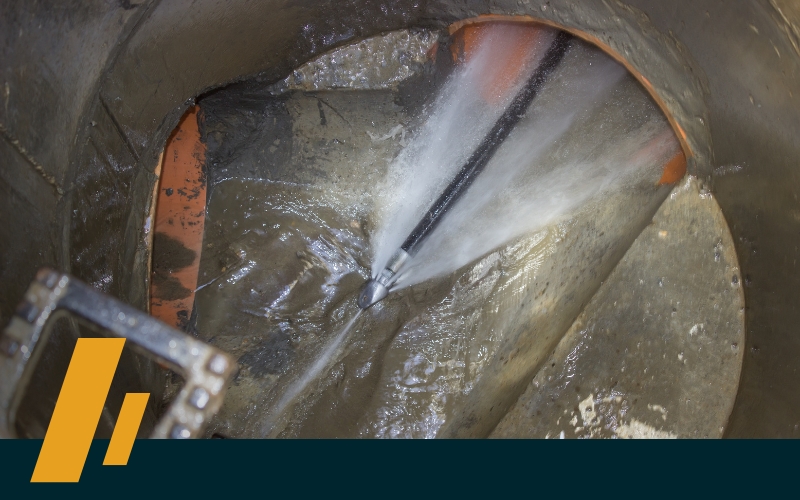
Drain or sewer cleaning removes material that is preventing wastewater from flowing properly. When the pipe itself remains structurally sound, cleaning may be all that is necessary.
But if the blockage formed because of a broken pipe, roots entering through a failed joint, a severely offset connection, or another physical defect, cleaning may only deal with the immediate obstruction.
The sewer may work normally again for a period of time before the same problem develops.
When backups repeatedly return, it may be time to stop asking only “What is clogging the sewer?” and start asking “Why does it keep clogging here?”
A sewer inspection can help answer that second question.
Can My Bellevue Sewer Line Be Repaired Without Digging Everything Up?
Possibly.
Trenchless technology can significantly reduce the amount of open excavation required for some sewer repair and replacement projects. That makes it an option worth evaluating when a damaged line runs beneath landscaped or otherwise improved portions of a property.
However, “trenchless” should not be treated as a promise that no digging will occur.
Access points are normally still required, and the existing sewer must meet the requirements of the chosen repair method.
A badly collapsed line, severe change in alignment, difficult access, or other structural conditions may limit the available trenchless options.
The better question is:
Which repair method will solve the actual sewer problem while avoiding unnecessary disruption?
Sometimes that is trenchless repair. Sometimes targeted excavation is more practical.
The inspection should help determine which approach fits the line.

Start With the Sewer You Actually Have
Dirt Cheap Sewer provides sewer and outdoor plumbing services throughout the Bellevue area and has more than 20 years of industry experience.
Our approach begins with determining what is happening underground before deciding how extensive the repair needs to be.
The objective is to match the solution to the condition of the line.
Get Clear Answers About Your Options
If your sewer line has been damaged, you should know:
- Where the problem is located
- What type of defect has been identified
- Whether the pipe can reasonably be repaired
- Whether replacement should be considered
- Whether trenchless methods may be practical
- Why the recommended method makes sense
Those answers make it easier to make an informed decision about the property.
Stop Repeatedly Clearing the Same Sewer Problem
If your Bellevue sewer keeps backing up, roots continually return, or an inspection has already identified structural damage, it may be time to determine whether the line needs repair.
Dirt Cheap Sewer can evaluate the affected sewer and discuss whether a targeted repair, trenchless solution, excavation, or replacement is appropriate for the condition of the pipe.
Frequently Asked Questions About Sewer Line Repair in Bellevue
Cleaning may solve the problem when the obstruction is caused by removable material inside an otherwise functional sewer line. Repair becomes more likely when an inspection identifies a structural defect such as a crack, displaced joint, root-damaged section, broken pipe, or collapse. Recurring blockages are often a good reason to investigate the condition of the pipe rather than repeatedly treating the obstruction.
No. If the damage is isolated and the surrounding sewer remains in usable condition, repairing or replacing only the affected section may be possible. More extensive replacement may be appropriate when deterioration occurs throughout the line or multiple structural problems are present.
Some sewer lines qualify for trenchless repair or replacement methods that require considerably less open excavation than conventional replacement. However, trenchless methods have qualification requirements, and access points may still be necessary. The existing line should be inspected before determining whether a trenchless method is practical.
Sewer lines can develop problems for many reasons, including root intrusion, ground movement, deteriorating pipe material, failed joints, corrosion, physical damage, or changes in pipe alignment. An inspection can help identify the specific condition affecting a particular line.
Roots generally enter a sewer through an existing opening such as a damaged joint, crack, or other defect. Cutting the roots out may restore flow, but if the opening remains, roots may eventually enter again. Repairing the affected section may be necessary when recurring root intrusion is connected to structural pipe damage.
Sewer repair addresses a particular defect while retaining usable portions of the existing system. Replacement involves installing new pipe through a larger portion of the sewer route. Which option is appropriate depends on the extent and condition of the damage.
No. Trenchless methods can reduce surface disruption and are extremely useful when project conditions allow them, but they are not appropriate for every damaged sewer. Conventional excavation may provide better access when a pipe has severely collapsed, changed alignment, or has other conditions that prevent a trenchless method from working effectively.
When the condition of the sewer has not already been documented, inspecting the line can provide valuable information before deciding how much repair is necessary. Understanding where the damage occurs and what the surrounding pipe looks like helps distinguish an isolated defect from more widespread deterioration.
Responsibility can depend on exactly where the sewer problem is located and whether the affected infrastructure is private or part of the public wastewater system. Identifying the location of the defect is therefore an important first step. Property owners should confirm responsibility and applicable requirements with Bellevue Utilities when the location of the problem creates uncertainty.
Yes, when site and pipe conditions allow it. If one portion of the sewer is badly damaged while the remaining line is structurally serviceable, replacing the affected section may be an option. The condition of the complete accessible line should be considered before choosing that approach.
If the sewer has already been cleaned and the same problem continues to return, consider having the line inspected. Repeated backups may indicate that an underlying structural issue is causing new obstructions to develop.
A known structural sewer problem should not be ignored. A partially functioning pipe can deteriorate further or become completely obstructed. Once a defect has been identified, discussing the available repair options can help you determine the appropriate next step before another backup occurs.
Get the Right Sewer Repair for Your Bellevue Property
A damaged sewer line needs more than a temporary solution.
The key is determining what failed, where it failed, how much of the pipe is affected, and which repair method makes sense for the conditions on the property.
Dirt Cheap Sewer provides sewer line repair and replacement services in Bellevue and can help evaluate the line before determining whether the problem calls for a localized repair, trenchless solution, conventional excavation, or broader replacement.
If your sewer keeps backing up or you already know the line is damaged, request an evaluation and find out what your practical repair options are.