

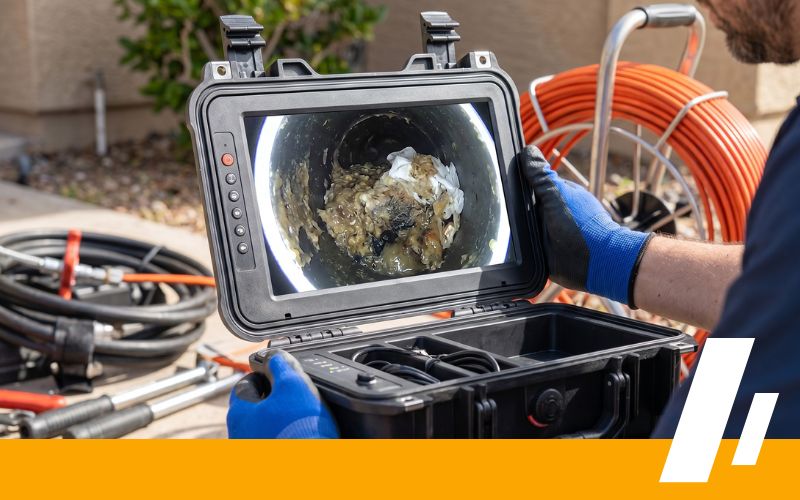
A sewer line inspection uses a specialized camera to examine the visible interior of an accessible sewer or drain line. For a Bellevue property, an inspection can help identify obstructions, root intrusion, separated connections, deterioration, and other conditions that may explain recurring backups or drainage problems. The findings can then guide the appropriate next step, whether that means cleaning, monitoring, additional evaluation, targeted repair, or sewer-line replacement.
A camera inspection does not automatically mean your sewer needs to be repaired. Its purpose is to provide visible information about the accessible portion of the line so that decisions are based on observed conditions rather than guesswork.
When Should You Consider a Sewer Inspection?
Different sewer problems can produce similar symptoms. A slow or backed-up drain might result from an ordinary obstruction, but repeated trouble may indicate roots, deterioration, a damaged connection, or another condition farther along the sewer line.
A sewer camera inspection may be an appropriate diagnostic step when you notice:
- Backups that return after the line has been cleaned
- Several fixtures draining slowly at the same time
- Gurgling or bubbling from drains and toilets
- Sewer odors without an obvious indoor source
- Suspected root intrusion
- Uncertainty about the condition of an existing sewer line
- A need to evaluate visible pipe condition before planning repairs
- Drainage concerns raised during a property transaction
- Questions about a sewer line before remodeling or other property work
An inspection can also be helpful after cleaning. Once accumulated material has been removed, the camera may provide a clearer view of the pipe and help determine whether an underlying defect contributed to the obstruction.
Important qualification: A camera inspection is not necessarily the first step in every situation. Standing water, heavy buildup, or a complete blockage may prevent the camera from seeing or passing through the affected area. Cleaning or another access step may be needed before an effective inspection can be completed.

What Can a Sewer Camera Inspection Reveal?
Obstructions and Accumulated Material
The camera may show debris, roots, grease, scale, or other material restricting the line. What can be identified depends on visibility and whether the camera can reach and pass the affected area.
Pipe and Connection Conditions
An inspection may reveal visible cracks, displaced joints, separated connections, corrosion, deformation, or collapsed sections. It may also show changes in pipe material or configuration along the accessible route.
Information for Repair Planning
If damage is visible, the location and extent of the observed condition can help narrow the available options. A localized defect may call for a targeted repair, while deterioration affecting a larger section could require a more extensive solution.
A camera inspection can help determine what should happen next, but it is important to understand what the camera can and cannot establish. It shows conditions visible from inside the accessible portion of the pipe. It cannot guarantee detection of every leak, exterior defect, surrounding soil problem, or condition located beyond an obstruction that the camera cannot pass.
Sewer Inspection for Bellevue Properties
A private side sewer carries wastewater from a Bellevue property toward the public sewer system. Because much of this pipe is underground, problems are not always visible from the surface. Symptoms inside the building or around the property may be the first indication that further evaluation is warranted.
The City of Bellevue may have information about the recorded location of sewer pipes associated with a property, but the city does not perform private-property sewer locates. A camera inspection serves a different purpose: it evaluates the visible interior condition of the accessible line rather than simply identifying its general route.
Access and pipe configuration can differ considerably from one Bellevue property to another. The inspection may begin through an exterior cleanout, an accessible interior opening, or another suitable entry point. The location of that access affects how much of the system can be evaluated.
If the inspection is being performed as part of a real-estate transaction, renovation, or repair plan, tell Dirt Cheap Sewer what documentation or information you need before the appointment.
How the Sewer Inspection Process Works
1. Review the Symptoms and History
Tell Dirt Cheap Sewer what has been happening, when the symptoms began, which fixtures are affected, and whether the line has previously been cleaned, inspected, or repaired.
Details about recurring backups, earlier work, or changes around the property can help identify the portion of the system that may need attention.
2. Identify an Appropriate Access Point
The inspection camera must enter through a suitable opening. An exterior or interior cleanout may provide access, but another entry method could be required when a usable cleanout is unavailable.
The line’s configuration, access conditions, and existing obstructions will determine how far the camera can travel.
3. Examine the Accessible Line
The camera is advanced through the accessible portion of the sewer or drain line. The technician reviews visible pipe surfaces, connections, obstructions, and other relevant conditions as access and visibility allow.
This process generally does not require excavating the yard merely to view the inside of an accessible line.
4. Review What Was Found
After the inspection, Dirt Cheap Sewer explains what was visible and discusses the appropriate next step. The findings may indicate that the line is open, that cleaning is needed, that further diagnosis is warranted, or that a repair option should be considered.
The goal is not to recommend the largest possible project. It is to match the next step to the conditions that could actually be observed.
Factors That Can Limit an Inspection
A sewer camera is a valuable diagnostic tool, but it cannot provide an unrestricted view under every condition. Inspection limitations may include:
- No suitable or safely accessible entry point
- Standing water obscuring the inside of the pipe
- Heavy buildup coating the pipe walls
- A blockage the camera cannot pass
- A collapsed or severely displaced section
- Sharp bends or configurations that restrict camera movement
- A branch line that cannot be reached from the available opening
- Conditions located outside the pipe that are not visible internally
Pulling and resetting a toilet may sometimes provide another access option when a usable cleanout is unavailable. Whether this is appropriate depends on the property and the portion of the system that needs to be examined.
When visibility is limited, Dirt Cheap Sewer can explain whether cleaning, another access method, line locating, or a different diagnostic step should be considered.

What Happens After the Inspection?
A sewer inspection does not lead to the same recommendation for every property. Possible next steps include:
No Immediate Corrective Work
If the accessible portion appears open and functional, no immediate cleaning or repair may be recommended. Dirt Cheap Sewer can explain whether monitoring or a later follow-up would be useful.
Drain or Sewer-Line Cleaning
Cleaning may be appropriate when roots, buildup, or another obstruction is restricting flow and the visible pipe condition supports that approach.
Additional Evaluation
Further investigation may be necessary when the symptoms are not explained by what the camera shows, access is limited, or the camera cannot reach the area of concern.
Targeted Sewer Repair
An isolated crack, separated connection, or damaged section may be a candidate for localized repair. The available method will depend on the location, pipe condition, access, and surrounding property conditions.
Sewer-Line Replacement
Replacement may be considered when deterioration, collapse, repeated failures, or damage affects a larger portion of the line. Inspection findings can help inform whether conventional excavation or a qualifying trenchless method should be evaluated.
Frequently Asked Questions
A sewer inspection uses a camera to view the accessible interior of a line. Drain cleaning removes suitable material that is restricting flow. An inspection may reveal that cleaning is needed, while cleaning may be required before the camera can obtain a usable view.
No. A camera can show visible interior defects, but it cannot confirm every leak or identify all exterior conditions. Additional testing or evaluation may be necessary when symptoms suggest a problem that is not visible during the inspection.
Not necessarily. An inspection may still be considered during a property transaction, before certain renovations, when reviewing a line with an uncertain history, or after previous sewer trouble. The appropriate timing depends on the reason for the evaluation.
That depends on access, pipe configuration, visibility, and whether the camera encounters an obstruction or damaged section it cannot pass. Dirt Cheap Sewer can explain which portions were accessible during the inspection.
A standard camera inspection is performed through an accessible opening and generally does not require excavation. A different access step may be necessary when the property does not have a suitable cleanout.
Not in every case. Cleaning may be needed when standing water, heavy buildup, or an obstruction prevents the camera from obtaining a clear view. Dirt Cheap Sewer can determine whether inspection or cleaning should come first based on the symptoms and access conditions.
It can provide important evidence for that decision. The final recommendation may also depend on the pipe material, extent and location of damage, line configuration, property access, and conditions that cannot be evaluated through the camera alone.
Find Out What Is Happening Inside Your Bellevue Sewer Line
Recurring backups and drainage problems should not be treated as though they all have the same cause. A sewer camera inspection can provide a clearer view of the accessible line and help separate a removable obstruction from a condition that requires additional evaluation or repair.
Tell Dirt Cheap Sewer what you have observed, which fixtures are affected, and whether the line has previously been cleaned or repaired. The team can help determine whether a camera inspection is the appropriate starting point for your Bellevue property.