

A damaged sewer line can cause recurring backups, slow drains, sewage odors, wet areas outside, and other problems that ordinary drain cleaning may not permanently solve. Dirt Cheap Sewer provides sewer line repair and replacement services in Federal Way, starting with diagnosis so the condition and location of the problem can be understood before recommending how to fix it.
Whether the issue involves a localized damaged section or a sewer line that may require more extensive replacement, the goal is to identify the underlying problem and choose a repair method that makes sense for the property.
When Drain Problems Keep Coming Back
Not every sewer backup means the sewer pipe itself is damaged. Grease, debris, roots, or other obstructions can sometimes restrict flow without requiring the line to be replaced.
The situation becomes more concerning when the same problems repeatedly return after the line has been cleared.
Signs that may justify a closer sewer-line evaluation include:
- Multiple drains backing up at the same time
- Toilets gurgling when other fixtures are used
- Recurring main-line clogs
- Sewage odors inside or outside the property
- Unusually slow drainage throughout the building
- Wet, soft, or unusually green areas in the yard
- Evidence of roots entering the sewer line
- Known cracks, breaks, offsets, or deterioration
- A sewer inspection showing structural problems
Repair Starts With Understanding the Cause
A sewer line should not automatically be replaced simply because it backed up.
The more useful questions are:
What is causing the problem?
Where is the damaged area?
How much of the pipe is affected?
Can the existing sewer line reasonably be repaired, or does replacement make more sense?
Answering those questions first can help prevent unnecessary excavation or a repair that does not address the actual problem.
Finding the Problem Before Choosing the Repair
A sewer repair recommendation should be based on the condition of the pipe rather than symptoms alone.
1. Evaluate the Symptoms
The first step is understanding what has been happening at the property.
Recurring backups, previous drain-cleaning history, visible surface problems, and which fixtures are affected can all help narrow down the likely source.
2. Inspect the Sewer Line
A sewer camera inspection can help reveal conditions inside the pipe that cannot be diagnosed from the surface.
Depending on accessibility and pipe condition, an inspection may show problems such as:
- Root intrusion
- Cracked pipe
- Broken sections
- Separated joints
- Pipe offsets
- Corrosion or deterioration
- Low areas or deformation
- Obstructions
- Sections that cannot be passed by the camera
A camera inspection is an important diagnostic tool, but it does not automatically determine the repair method by itself. Site conditions and the overall condition of the sewer line also matter.
3. Determine the Appropriate Repair Approach
Once the problem is better understood, Dirt Cheap Sewer can evaluate whether the situation calls for cleaning, a localized repair, trenchless work, conventional excavation, or more extensive replacement.
The objective is not to recommend the biggest project. It is to recommend a scope that addresses the actual sewer problem.
Does the Whole Sewer Line Need to Be Replaced?
Sewer Line Repair
Repair may be appropriate when damage is limited to a specific section of pipe.
Examples may include:
- A localized break
- A damaged joint
- A limited section affected by roots
- A short section of deteriorated pipe
- Damage associated with a specific excavation area
A targeted repair may allow the rest of a functional sewer line to remain in place.
Sewer Line Replacement
Replacement may become the more practical option when structural problems affect a significant portion of the line or when repeated repairs are unlikely to provide a sensible long-term solution.
Conditions that can influence a replacement recommendation include:
- Multiple damaged sections
- Extensive deterioration
- Significant pipe deformation
- Repeated failures in an aging line
- Pipe conditions incompatible with a particular repair method
- A sewer alignment or structural problem requiring broader correction
The appropriate choice depends on what the inspection reveals and what can realistically be repaired.
Different Sewer Problems Require Different Repair Methods
There is no single sewer repair method that is right for every Federal Way property.
Traditional Sewer Excavation
Conventional sewer excavation exposes the damaged pipe so it can be repaired or replaced directly.
Excavation may be appropriate when:
- The pipe has collapsed
- Access to the damaged section is required
- The line must be repositioned
- Trenchless methods are not compatible with the existing pipe
- A section of sewer must be physically removed
- Site conditions make open excavation the more practical approach
Excavation can affect landscaping, driveways, walkways, or other surface improvements depending on where the sewer line runs.
Trenchless Sewer Repair
Some sewer lines may qualify for trenchless repair or replacement methods that reduce the amount of open digging required.
Trenchless work can be useful in the right circumstances, but eligibility depends on the existing pipe, the type of damage, access points, alignment, and other site conditions.
A trenchless method should therefore be selected because it is appropriate for the line—not simply because it requires less digging.
Localized Sewer Repair
When only a limited portion of the line is damaged, exposing and repairing that section may sometimes be more sensible than replacing the entire sewer lateral.
Diagnosis determines which option deserves consideration.
The Pipe Is Only Part of the Project
Sewer repair planning can be affected by much more than the condition of the pipe itself.
Factors may include:
- Sewer depth
- Length of the damaged area
- Soil conditions
- Trees and root systems
- Retaining walls
- Driveways and pavement
- Landscaping
- Fences
- Utility conflicts
- Property access
- Sewer cleanout availability
- Pipe material
- Pipe diameter
- Location of the connection to the public system
A sewer line beneath an open lawn presents a different repair situation than one running beneath a driveway, patio, retaining wall, or heavily landscaped area.
That is why an accurate scope generally requires evaluating both the sewer line and the property surrounding it.

Sewer Line Problems at Federal Way Properties
Federal Way includes a mix of established residential neighborhoods, newer development, commercial corridors, sloped properties, wooded areas, and properties with mature landscaping.
Those differences can influence how private sewer laterals are accessed and repaired.
A sewer line running through an open portion of a yard may allow relatively straightforward access. Another line may travel beneath pavement, landscaping, fencing, or other improvements that affect excavation and restoration planning.
Properties with mature trees can also require evaluation for root intrusion when recurring sewer problems are present.
The important point is that sewer repair should be planned around the actual property rather than treated as a standardized project.
Local verification note before publication:
Confirm any Federal Way permit requirements, right-of-way requirements, inspection procedures, utility coordination requirements, and current responsibility boundaries with the applicable City of Federal Way and sewer utility sources before adding specific regulatory claims.
Who Is Responsible for the Damaged Sewer Line?
Before major sewer work begins, it is important to determine where the problem is located and which portion of the system is the property owner's responsibility.
A typical property has a private sewer lateral connecting the building to a larger public sewer system. Responsibility can vary depending on the utility, location of the defect, easements, and local rules.
Dirt Cheap Sewer can investigate problems affecting the private sewer line, but ownership and responsibility should be verified before work is authorized when the suspected defect is near the public connection or right-of-way.
Clearing the Blockage Does Not Always Repair the Pipe
Drain cleaning and sewer repair solve different problems.
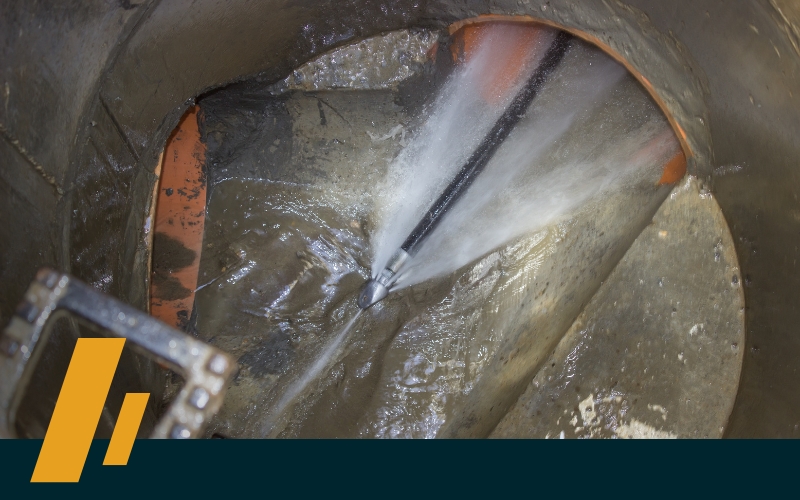
If grease, debris, roots, or another obstruction is restricting flow through an otherwise serviceable pipe, drain cleaning or hydro jetting may restore drainage.
If the sewer pipe is broken, collapsed, severely displaced, or structurally deteriorated, cleaning may reopen the line temporarily without correcting the underlying defect.
That distinction is especially important when a property experiences repeated backups.
Instead of repeatedly treating the symptom, it may be time to inspect the sewer line and determine why the obstruction keeps returning.
For that reason, Dirt Cheap Sewer's sewer services may involve several related steps:
- Drain cleaning
- Hydro jetting
- Sewer camera inspection
- Locating the damaged area
- Sewer excavation
- Trenchless sewer repair
- Sewer line repair
- Sewer line replacement
The appropriate combination depends on the problem discovered.
Sewer Repair Costs Depend on the Actual Scope
There is no reliable single price for sewer line repair or replacement without first understanding the condition of the pipe and the property.
Cost can be influenced by:
- Length of pipe being repaired or replaced
- Depth of the sewer line
- Type of sewer pipe
- Location of the damaged section
- Excavation requirements
- Access for equipment
- Trenchless eligibility
- Driveway or pavement removal
- Landscaping restoration
- Utility conflicts
- Required permits or inspections
- Complexity of reconnecting the sewer line
A small localized repair in an accessible yard is fundamentally different from replacing a deeper sewer line beneath pavement or other improvements.
The most useful way to evaluate cost is therefore to identify the problem first and develop a repair scope from actual site conditions.
Avoid publishing fixed pricing until Dirt Cheap Sewer has supplied approved price ranges.
Diagnose First. Repair What Actually Needs Repair.
Sewer problems can become expensive when assumptions replace diagnosis.
Dirt Cheap Sewer approaches sewer line repair by first determining what is happening underground and then considering the repair options appropriate for the property.
That process can include:
- Evaluating recurring sewer symptoms
- Inspecting accessible sewer lines
- Identifying the location of damaged pipe
- Comparing repair and replacement options
- Evaluating excavation and trenchless possibilities
- Planning around access and site conditions
- Explaining the recommended scope before work proceeds
The objective is straightforward: understand the sewer problem well enough to make an informed repair decision.
A Practical Sewer Contractor for Complex Outdoor Problems
Sewer lines interact with soil, drainage, foundations, water lines, landscaping, pavement, and other underground infrastructure.
Because Dirt Cheap Sewer focuses on underground sewer, drainage, and outdoor plumbing work, related site conditions can be considered as part of the overall diagnosis rather than treating the sewer pipe in isolation.
Federal Way Sewer Line Repair FAQ
Symptoms alone generally cannot determine that. A sewer inspection and evaluation of the pipe condition can help identify whether the problem is localized enough to repair or extensive enough that replacement should be considered.
Sometimes. If structural damage is confined to a limited portion of the sewer line, a localized repair may be possible. The condition of the remaining pipe and access to the damaged area also matter.
No. Some projects may qualify for trenchless repair or replacement methods, while others require conventional excavation. Eligibility depends on pipe condition, alignment, access, and the type of damage.
Recurring backups can have several causes, including roots, pipe damage, offsets, deterioration, or recurring accumulation inside the line. A sewer camera inspection may help determine why the obstruction keeps returning.
Project duration varies considerably. A localized repair can have a very different scope than a deeper or longer sewer replacement involving pavement, utilities, difficult access, permitting, or extensive restoration. Dirt Cheap Sewer should evaluate the property before providing a project-specific timeline.
Not automatically. If the majority of the sewer line remains functional, repairing a specific damaged section may be reasonable. If deterioration is widespread or failures continue across multiple sections, broader replacement may become more practical.
Responsibility depends on where the damaged section is located and the rules of the applicable sewer utility or jurisdiction. The exact location of the defect and current local responsibility requirements should be verified before major work begins.
Get to the Cause of Your Sewer Problem
Recurring sewer backups are frustrating, but repeatedly clearing the line may not solve the problem if the pipe itself is damaged.
Dirt Cheap Sewer provides sewer line repair and replacement services in Federal Way with an emphasis on identifying the problem first. Once the condition and location of the sewer issue are understood, the appropriate repair, excavation, trenchless, or replacement options can be evaluated.