

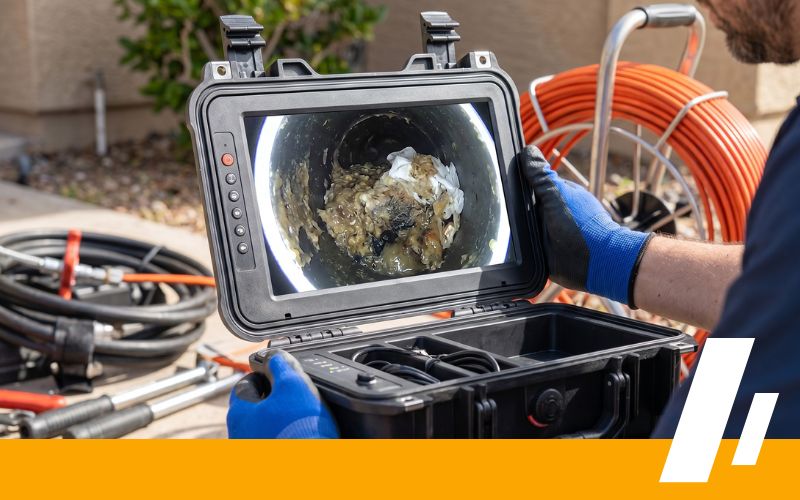
A sewer inspection uses a specialized camera to examine the visible interior of an accessible sewer line. It can help identify obstructions, root intrusion, buildup, separated joints, offsets, cracks, damaged sections, and other conditions that may be affecting the line.
For Kirkland property owners, buyers, sellers, and managers, the goal is not simply to collect footage. It is to obtain useful information before deciding whether a sewer needs cleaning, repair, replacement, or continued observation.
Dirt Cheap Sewer provides video sewer inspections to help Kirkland customers investigate symptoms, evaluate accessible sewer lines, and make better-informed decisions about what should happen next.
Get a Better Look Before Choosing a Sewer Solution
A sewer line runs underground, so a property owner may notice the effects of a problem without being able to see its source. A toilet may gurgle. Multiple drains may slow down together. A backup may return after the line has already been cleared. In other situations, there may be no obvious symptoms, but a buyer or owner wants more information about the condition of the line.
A sewer camera inspection provides a view inside an accessible portion of the pipe. The footage can help distinguish between a temporary obstruction and a condition that may require a more permanent response.
Depending on what the camera reveals, the next step could involve:
- Clearing a localized obstruction
- Cleaning grease, sludge, roots, or other buildup
- Monitoring a condition that is not currently restricting flow
- Investigating a suspicious section more closely
- Repairing an isolated area of damage
- Evaluating trenchless repair or replacement
- Planning excavation when another method is not practical
An inspection does not automatically mean that a major repair will be recommended. Its purpose is to replace assumptions with better information.
Signs That a Sewer Inspection May Be Useful
A sewer inspection may be appropriate when symptoms suggest that the problem extends beyond a single sink, tub, or toilet.
Consider having the line inspected if you have noticed:
Recurring Sewer Backups
A backup that returns after cleaning may indicate roots, a damaged section, a low area in the pipe, or another condition that has not been fully resolved.
Several Slow Drains
One slow fixture may have a localized clog. When several fixtures drain slowly at the same time, the restriction may be farther downstream in a shared building drain or sewer line.
Gurgling Toilets or Drains
Gurgling may occur when wastewater and air are having difficulty moving through the drainage system. A camera inspection can help investigate whether a visible obstruction or pipe condition is contributing to the problem.
Sewage Odors
Persistent sewer odors may justify further investigation, particularly when they appear alongside slow drainage, backups, or unexplained moisture.
Unexplained Wet or Sunken Areas
A wet, unusually green, soft, or sunken area over the suspected sewer route can be a reason to investigate. Camera footage alone cannot confirm every leak, but it can provide useful evidence about visible pipe conditions.
A Problem That Keeps Returning
Repeatedly clearing a line without identifying why it becomes blocked can turn a symptom into an ongoing expense. An inspection can help identify whether the same obstruction or structural condition is contributing to the pattern.
Inspections for Property Decisions and Planning
A sewer inspection can also be useful when the line is not currently backing up.
Before Buying a Kirkland Property
A standard home inspection may not include a full camera inspection of the private sewer line. A dedicated sewer scope can give a buyer more information about an underground system that could otherwise remain unseen.
The inspection should still be treated as one part of the buyer’s overall due diligence. Access conditions and the physical limits of the camera may prevent every portion of the line from being evaluated.
Before Selling a Property
A seller may choose to inspect the line before listing or during transaction preparation. Finding a concern early can provide more time to understand it rather than responding under the pressure of a closing deadline.
Before Remodeling or Adding Plumbing Fixtures
A camera inspection does not determine plumbing capacity or replace design and permit review. However, it may reveal visible conditions that should be considered before adding new demand to an existing sewer connection.
Before Sewer Cleaning or Repair
Inspection footage can help determine whether cleaning is a reasonable next step or whether the line appears to have structural damage that cleaning will not correct.
After Certain Sewer Services
A post-service inspection may be used to document the visible condition of the accessible line and determine whether an obstruction has been removed. Whether this is appropriate depends on the service performed and the condition of the pipe.
Root Intrusion
Roots can enter through joints, cracks, or other openings. Fine roots may collect debris, while heavier growth can restrict flow and contribute to repeated backups.
A camera may show roots inside the line, but additional evaluation may be needed to understand the condition of the pipe around the point of entry.
Buildup and Deposits
Grease, soap residue, sludge, mineral deposits, and other materials can reduce the usable diameter of a pipe. The camera may help show where buildup is concentrated and whether cleaning should be considered.
Foreign Objects and Obstructions
Some blockages are caused by wipes, hygiene products, construction debris, or objects that should not have entered the sewer system. Identifying the material and location can help determine an appropriate removal method.
Separated or Offset Joints
Sections of pipe can shift so that adjoining ends no longer align correctly. An offset may catch solids, interfere with camera travel, or allow roots to enter.
Cracks, Breaks, and Deterioration
Depending on visibility, a camera may reveal cracks, broken sections, missing pipe material, corrosion, or deterioration. The footage helps establish what can be seen, but not every crack proves that a line is actively leaking.
Low Areas or “Bellies”
A section that has lost its intended slope may hold water and waste. Standing water can also obscure the camera’s view, so the full condition of the submerged pipe may remain uncertain.
Deformation or Partial Collapse
The camera may show a pipe that is flattened, deformed, or partially collapsed. Severe deformation can prevent the camera from continuing through the line.
Connection and Transition Conditions
The inspection may reveal changes in pipe material, changes in diameter, branch connections, or visible transitions between sections. These observations can help explain where recurring problems occur.
What to Expect During a Kirkland Sewer Inspection
The exact process depends on the property, the available access point, and the condition of the line.
1. Discuss the Reason for the Inspection
The process begins with the customer’s concern. Is there an active backup? Is the line repeatedly clogging? Is the inspection connected to a purchase, sale, remodel, or proposed repair?
These details help give the footage useful context.
2. Locate a Suitable Access Point
The camera must enter through an accessible opening, such as an appropriate cleanout or another usable access point.
If no practical access is available, additional work may be needed before the line can be inspected. Dirt Cheap Sewer should confirm available access methods and any related charges before work begins.
3. Advance the Camera Through the Line
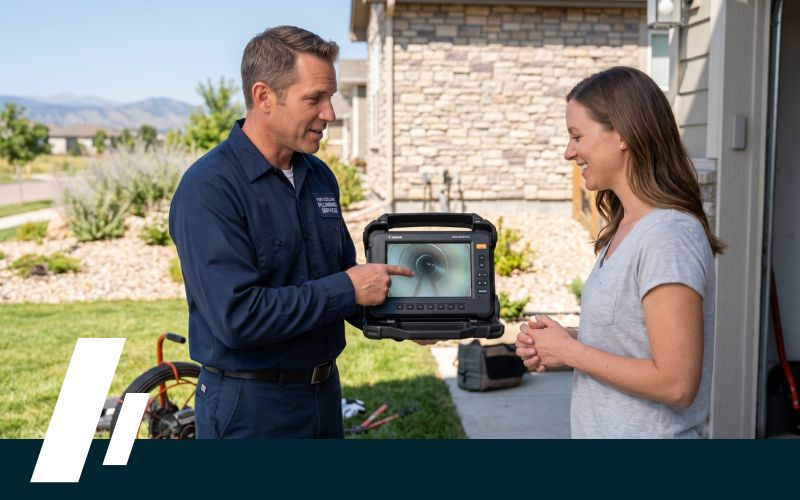
The camera is fed through the accessible piping while the operator monitors the interior. Progress depends on the pipe’s diameter, layout, bends, connections, water level, and physical condition.
4. Review Visible Conditions
The operator looks for restrictions, roots, buildup, damaged areas, standing water, changes in pipe material, and other observable conditions.
Customers may be able to view the inspection as it takes place. [VERIFY WITH CLIENT: Confirm whether real-time viewing is offered for every Kirkland inspection.]
5. Explain the Findings
The findings should connect visible conditions to practical next steps. If an issue is observed, the discussion may include cleaning, repair, replacement, additional access, or continued monitoring.
6. Provide the Selected Documentation
Available inspection packages may include different forms of documentation, such as recorded footage or a written report.
What the Inspection Can Help Determine
A successful inspection may help answer questions such as:
- Is there a visible obstruction?
- Are roots entering the accessible line?
- Does buildup appear to be reducing the pipe opening?
- Are joints visibly offset or separated?
- Is water collecting in a low section?
- Is there visible cracking, deformation, or deterioration?
- Does the line appear open after cleaning?
- Is there a condition that may justify repair planning?
- Can the camera travel through the accessible portion of the line?
These observations can narrow the range of reasonable next steps.
Important Inspection Limitations
A sewer camera is a diagnostic tool, not an unrestricted view of the entire underground system.
The inspection may be limited by:
- A missing, buried, damaged, or inaccessible cleanout
- A complete blockage
- Standing or flowing water
- Heavy buildup on the pipe walls
- Tight bends or changes in diameter
- Severe offsets, deformation, or collapse
- Branches that cannot be entered from the selected access point
- Camera reach
- Conditions outside the pipe
A camera primarily shows the interior surface that is visible from its position. It does not directly evaluate surrounding soil, confirm the condition of every exterior pipe surface, or guarantee that the line is free of leaks.
It may also be difficult to determine the precise depth or location of a defect from video footage alone. If repair planning requires surface location information, ask whether compatible locating work is included or available.
The Camera Is the Beginning of the Decision—not the Repair Itself
Inspection findings should be considered alongside symptoms, service history, access, pipe material, severity, location, and the customer’s goals.
When Cleaning May Be Appropriate
Drain cleaning or hydro jetting may be considered when the primary problem is:
- Accumulated grease or sludge
- Certain types of root intrusion
- Deposits restricting the line
- Loose material or debris
- A recurring obstruction in an otherwise serviceable pipe
Cleaning restores flow or removes material. It does not repair a crack, close a separated joint, correct a belly, or reconstruct a collapsed pipe.
The condition of the line must also be considered before choosing an aggressive cleaning method.
When a Localized Repair May Be Considered
An isolated repair may be appropriate when damage appears concentrated in one accessible section and the remainder of the line is in usable condition.
The feasibility of a spot repair depends on factors such as:
- The location and depth of the problem
- Access to the damaged section
- Pipe material and diameter
- Nearby utilities and hardscaping
- The condition of adjoining pipe
- Permit and right-of-way requirements
When Trenchless Work May Be Evaluated
Pipe lining or pipe bursting may reduce the amount of open excavation required in qualifying situations. However, trenchless methods are not suitable for every pipe or every defect.
Significant collapse, severe deformation, poor alignment, inadequate access, or other site conditions may limit the available trenchless options.
When Excavation May Be Necessary
Traditional excavation may be required when a pipe cannot be restored through an accessible cleaning or trenchless method. Excavation can also provide direct access when a damaged section must be exposed, removed, or realigned.
When Monitoring May Be Reasonable
Not every visible imperfection requires immediate replacement. A condition that is not substantially restricting flow or worsening may sometimes be documented and monitored.
That decision should reflect the severity of the condition, the property’s history, and the risk of postponing action.
Understanding the Private Side Sewer
Within the City of Kirkland’s sewer district, the city maintains the public sewer infrastructure, including public sewer mains. The customer owns and maintains the private side sewer that connects the building to the public main. According to the city, that private responsibility includes the side sewer on private property and within the public right-of-way. City of Kirkland Wastewater Department
This distinction matters because a problem near the street is not automatically located in the public main. The observed location and nature of the condition can help determine which party should be contacted.
A private camera inspection does not replace an inspection performed by the City of Kirkland, nor does it determine legal responsibility by itself.
Ask About Existing Sewer Records
The City of Kirkland may have an as-built record showing the approximate location of a property’s private side sewer. Property owners can request that information through the city’s service portal or Public Works. Availability varies by property, and an as-built should not be treated as a guarantee of the pipe’s exact field location.
Existing records can still provide useful background when:
- An access point cannot be found
- The sewer route is uncertain
- A repair is being considered
- Landscaping or hardscaping covers the likely route
- The property has been altered since the line was installed
Kirkland Properties Are Not All Alike
A useful Kirkland sewer page should not assume that every property has the same pipe material, age, layout, or access conditions.
An inspection may involve:
- A detached home with a straightforward side-sewer route
- A property with mature landscaping near the suspected line
- A building with limited exterior access
- A sewer passing beneath a driveway or other hard surface
- A remodeled property with multiple plumbing transitions
- A shared or unusually routed connection
- A property near an easement or public right-of-way
These conditions can affect where the camera enters, how far it travels, and what repair methods may later be practical.
Planning Beyond the Inspection
A camera inspection itself is generally nondestructive, but repair work prompted by its findings may involve permits, utility-location requirements, right-of-way coordination, or municipal inspection.
Requirements depend on the exact location and scope of the proposed work. Confirm current requirements with the City of Kirkland before construction begins.
What Affects the Cost of a Sewer Inspection?
The price of a sewer inspection can depend on more than the length of the pipe.
Relevant factors may include:
- Whether a usable cleanout is available
- Where the cleanout is located
- Whether additional access work is required
- The number of lines or branches being inspected
- Whether a blockage prevents camera travel
- Whether cleaning is required before useful footage can be obtained
- The type of documentation requested
- Whether surface locating is requested or necessary
- Whether the inspection is part of a real-estate transaction
- Whether a follow-up inspection is performed after service
The current Dirt Cheap Sewer website describes multiple sewer-inspection packages, but pricing, access methods, reports, and package details should be confirmed before this Kirkland page is published.
A lower-priced inspection is not necessarily the best value if it does not provide the documentation needed for the customer’s purpose. Someone investigating a recurring clog may have different needs than a buyer who wants recorded footage and a formal report.
Before scheduling, ask what the quoted inspection includes and what may result in an additional charge.
Practical Information for Your Next Sewer Decision
The value of a sewer inspection depends on more than putting a camera into a pipe. The footage must be viewed in context and translated into a reasonable next step.
Dirt Cheap Sewer provides sewer inspection as part of a broader range of outdoor plumbing and sewer services. If the inspection reveals a problem, the line can be evaluated for cleaning, targeted repair, trenchless work, or excavation based on its visible condition and the limitations of the property.
Column 1: Diagnose Before Digging
Camera footage can help identify visible conditions before a property owner commits to invasive work. When the line is accessible, this can reduce guesswork and clarify whether excavation should even be considered.
Column 2: Match the Response to the Finding
Roots, buildup, offset joints, and collapsed pipe are different problems. They should not automatically receive the same recommendation. The next step should be based on the evidence gathered and the practical limits of each option.
Column 3: Explain the Limitations
A responsible inspection should distinguish between what was clearly observed, what remains uncertain, and what could not be reached. That distinction helps customers make decisions without treating incomplete footage as a guarantee.
Kirkland Sewer Inspection FAQs
A sewer camera inspection involves inserting a specialized camera through an accessible cleanout or other suitable opening. The camera provides a view of the visible interior of the line and may reveal roots, buildup, obstructions, separated joints, standing water, deformation, cracks, or other conditions.
An inspection may be useful when multiple drains are slow, backups recur, toilets gurgle, sewer odors persist, or previous cleaning has not resolved the problem. It may also be requested before buying or selling a property, planning a remodel, or approving a sewer repair.
Not necessarily. A general home inspection may identify visible plumbing concerns without inserting a camera through the private sewer line. Buyers should confirm exactly what their inspection package includes rather than assuming a sewer scope is part of it.
No. A camera shows accessible and visible interior surfaces. Water, buildup, poor lighting, bends, or the camera’s position may hide defects. The footage may suggest a damaged area, but it cannot guarantee that every leak, crack, or exterior condition has been found.
Sometimes, but not always. A complete blockage, collapsed pipe, severe offset, standing water, tight bend, change in diameter, or lack of access may prevent the camera from reaching the full line.
The inspection findings should identify how far the camera traveled and which areas could not be evaluated.
A suitable cleanout is usually the most convenient access point. If one is not available, another access method may be possible, but it can require additional work and cost.
Ask Dirt Cheap Sewer to confirm the appropriate access options for your property before the appointment.
The camera inspection itself generally does not require excavation when a usable access point is available. Digging may become necessary if there is no suitable access or if the findings lead to an excavation-based repair.
It can provide important evidence, but replacement should not be based on one isolated image without context. The decision depends on the extent and location of damage, recurring symptoms, overall pipe condition, access, repair feasibility, and the risks of leaving the condition in place.
No. The camera is used to inspect the line, not clean it. If the line is blocked, drain cleaning or another removal method may be needed. Cleaning may also be required before the camera can obtain a useful view.
Some inspection equipment can be paired with locating technology, but this should not be assumed. Confirm whether locating is included, available as an additional service, or appropriate for the property.
Within Kirkland’s sewer district, the City of Kirkland states that the customer owns and maintains the private side sewer connecting the building to the public sewer main, including portions in the public right-of-way. The city maintains the public main.
Responsibility in a particular case may depend on the actual location and nature of the problem, so confirm uncertain situations with the city.
Documentation depends on the inspection package selected. Confirm whether the service includes recorded footage, still images, a written report, verbal findings, or a repair proposal before scheduling.
Find Out What Is Happening Inside Your Sewer Line
You should not have to choose between cleaning, repair, and replacement based only on symptoms above ground.
A sewer camera inspection can provide a clearer view of accessible pipe conditions and help you understand which next steps deserve consideration. Whether you are investigating a recurring backup, preparing for a property transaction, or evaluating a proposed repair, begin with the condition of the line.
Request a sewer inspection from Dirt Cheap Sewer in Kirkland.