

A sewer inspection gives you a direct look inside an underground sewer line so you can better understand what is causing recurring drainage problems, where a defect may be located, and whether cleaning, repair, or replacement deserves further consideration.
Dirt Cheap Sewer provides sewer camera inspections in Auburn to help property owners make decisions based on what is actually happening inside the pipe rather than relying on symptoms alone.
What Does a Sewer Inspection Show?
A sewer inspection typically involves feeding a specialized camera through an accessible portion of the sewer or drain system so the interior of the pipe can be viewed in real time.
The camera can help identify visible conditions such as:
- Root intrusion
- Heavy buildup
- Recurring obstructions
- Cracks or breaks
- Separated pipe joints
- Corrosion or deterioration
- Low areas where water may collect
- Foreign objects
- Signs that a portion of the line may have shifted
- Areas that may require additional cleaning or repair
A camera inspection does not automatically tell you that the sewer needs to be replaced. Its value is in helping narrow down the problem and providing evidence that can guide the next step.
For some properties, the inspection confirms that cleaning is the appropriate response. For others, it can reveal a structural issue that cleaning alone will not correct.

Signs It May Be Time to Inspect Your Sewer Line
A single slow drain does not necessarily mean there is a problem with the main sewer line. When several drains are affected or the same problem continues returning, however, looking farther into the system may make sense.
Common reasons Auburn property owners request a sewer inspection include:
Recurring Drain or Sewer Backups
If a line is cleared but the problem repeatedly returns, a camera inspection may help determine whether roots, pipe damage, buildup, or another underlying condition is contributing to the recurring blockage.
Multiple Slow Drains
One slow fixture can often be a localized plumbing problem. Several slow drains at the same time may suggest an issue farther downstream.
Unexplained Sewer Odors
Sewer odors can have several possible causes. When other warning signs are present, inspecting the line may help determine whether a problem exists within the underground drainage system.
Gurgling or Bubbling Fixtures
Unusual sounds from drains or toilets can sometimes accompany restricted drainage or airflow within the system. An inspection can be one part of diagnosing the larger issue.
Before Sewer Repair
When access allows, inspecting the line before recommending a repair can help clarify where the problem is located and how extensive it appears to be.
After Repeated Sewer Cleaning
If repeated cleanings provide only temporary relief, a camera can help determine whether there is a structural reason the same section keeps causing problems.
Does a Sewer Inspection Clean the Pipe?
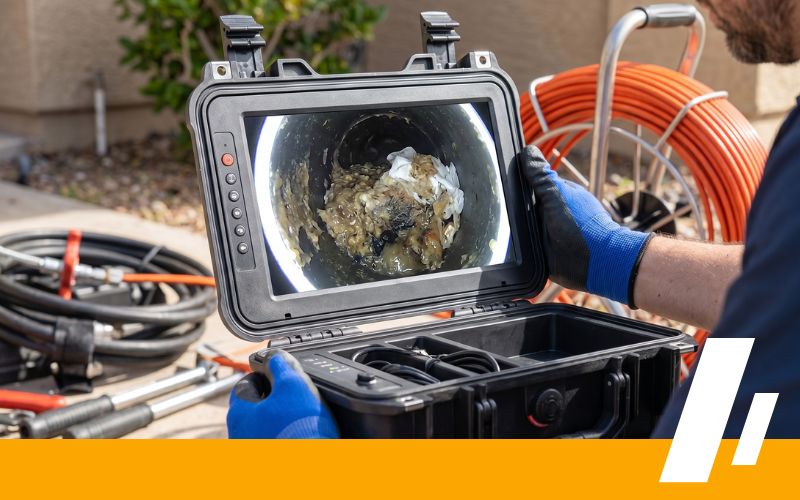
No. A sewer camera inspection and sewer cleaning serve different purposes.
A camera inspection is primarily a diagnostic service. It allows the technician to visually evaluate accessible portions of the sewer line.
Drain cleaning, sewer cleaning, and hydro jetting are designed to remove or reduce obstructions and buildup.
Depending on the condition of the pipe, cleaning may be necessary before the camera can provide a useful view. A heavily blocked or dirty line can prevent the camera from clearly showing the pipe walls.
In other situations, the inspection may be performed first to help determine what type of cleaning or repair should be considered.
The correct order depends on the symptoms, access to the line, and what is found during the evaluation.
Common Sewer Problems Visible During an Inspection
A sewer camera can provide useful information about several common underground pipe conditions.
Tree Root Intrusion
Roots can enter sewer lines through damaged joints, cracks, or other openings. Once inside, they can collect debris and contribute to recurring blockages.
A camera may show the location and apparent severity of visible root intrusion.
Cracked or Broken Pipe
Visible fractures or damaged pipe sections may indicate that the sewer needs more than routine cleaning.
The appropriate repair method depends on the location, material, severity of the damage, and surrounding conditions.
Pipe Separation
Older or damaged sewer lines can sometimes separate at joints. Even a relatively small displacement can interfere with flow or allow debris and roots to enter.
Heavy Buildup
Grease, waste, scale, and other material can gradually reduce the usable diameter of a sewer line.
An inspection may help show whether additional cleaning should be considered.
Bellied or Low Pipe Sections
A portion of a sewer line can sometimes settle and create a low area where water and waste collect.
A camera may provide visual clues that a low section exists, although additional evaluation may be needed to understand the exact condition and grade of the pipe.
Foreign Objects
Construction debris, damaged components, or other objects can occasionally become lodged inside a sewer line.
Locating the obstruction can help determine how it should be addressed.
A Camera Inspection Is One Part of Sewer Diagnosis
A sewer camera is an important diagnostic tool, but it is not a substitute for evaluating the entire situation.
The camera primarily shows what is visible inside the pipe.
It may not independently determine:
- The exact depth of every sewer section
- The full condition of the soil surrounding the pipe
- Why a pipe shifted or settled
- Whether an inaccessible section has a defect
- The precise location of every underground utility
- Whether a particular repair method is appropriate without additional evaluation
The camera view should be considered alongside the property's symptoms, the location of the sewer line, available access points, pipe material, and the type of damage found.
Dirt Cheap Sewer approaches sewer inspections as part of that larger diagnostic process rather than treating the camera footage as the entire answer.

What to Expect During a Sewer Inspection
The exact process can vary depending on the property and available access, but a sewer inspection generally follows several steps.
1. Review the Symptoms
The first step is understanding what has been happening.
That may include discussing backups, slow drains, previous cleaning, known sewer repairs, or recurring trouble in a particular part of the system.
2. Locate a Suitable Access Point
The sewer camera needs an appropriate entry point into the drainage system.
Existing cleanouts are often useful, although available access differs from property to property.
3. Run the Camera Through the Line
The camera is advanced through accessible sections of the pipe while the technician watches for visible obstructions, defects, and changes in pipe condition.
4. Identify Areas of Concern
When a problem is visible, the inspection can help narrow down where it appears within the line and what type of condition is present.
5. Discuss the Next Step
The goal is not to recommend the largest possible project.
If cleaning appears appropriate, that should be part of the discussion. If the line shows structural damage, repair options can be evaluated based on the actual condition of the sewer.
Know What You Are Repairing Before Work Begins
Underground sewer work can involve significant excavation, trenchless equipment, or other specialized repair methods.
Before deciding how to address a suspected sewer failure, it is useful to understand what is wrong and where the problem is located.
A sewer camera inspection may help determine whether the visible problem appears to involve:
- A localized obstruction
- One damaged section
- Root intrusion
- Multiple defects
- Pipe deterioration
- A condition that may require further excavation or repair evaluation
Not every sewer defect requires replacement of the entire line.
Likewise, cleaning cannot correct a pipe that has physically failed.
Inspection helps separate those situations so the recommended work can better match the actual problem.
Residential Sewer Camera Inspection in Auburn
Residential sewer systems can develop problems gradually.
A homeowner may first notice occasional slow drainage, a toilet that behaves differently, or a backup that seems to disappear after cleaning. If those symptoms continue, the underlying cause deserves a closer look.
A camera inspection can be particularly useful when a homeowner is trying to answer questions such as:
- Why does this drain problem keep returning?
- Are roots entering the sewer?
- Is there visible pipe damage?
- Does the line need more cleaning?
- Is there one damaged section or a broader problem?
- Should repair or replacement be considered?
The purpose of the inspection is to reduce uncertainty.
Instead of deciding based solely on symptoms at the surface, you can evaluate the interior condition of accessible portions of the sewer line.
Diagnosing Sewer Problems at Commercial Properties
Commercial properties can place different demands on drain and sewer systems depending on the building, occupancy, and type of use.
A recurring sewer problem can also disrupt employees, tenants, customers, or normal operations.
Camera inspection may be useful when investigating:
- Repeated sewer backups
- Slow drainage affecting multiple fixtures
- Recurring blockages
- Suspected pipe damage
- Root intrusion
- Sewer problems that continue after previous cleaning
The inspection provides information that can help property owners and managers decide whether the next step should involve cleaning, maintenance, repair, or a more extensive evaluation.
The Inspection Helps Point Toward the Right Service
Many sewer problems produce similar symptoms above ground.
A backup caused by accumulated debris may feel similar to a backup caused by roots or a damaged pipe.
That is why diagnosis matters.
Depending on what the inspection reveals, the next step may include:
Drain or Sewer Cleaning
Mechanical cleaning may be appropriate when an obstruction can be cleared and the pipe remains structurally functional.
Hydro Jetting
Hydro jetting may be considered when appropriate for the condition of the pipe and when substantial buildup needs to be removed from the interior walls.
Sewer Repair
A localized defect may require repairing a specific portion of the sewer line.
Trenchless Sewer Repair
Certain sewer conditions may qualify for a trenchless repair method that reduces the amount of open excavation required.
Sewer Excavation
Traditional excavation may still be appropriate when pipe condition, access, alignment, or the nature of the damage makes other methods unsuitable.
Sewer Line Replacement
When deterioration or damage is sufficiently widespread, replacing a larger section of the sewer may deserve consideration.
The inspection does not predetermine the answer. It helps supply the information needed to make that decision.
Sewer Inspection Pricing Depends on the Property and Scope
The cost of a sewer inspection can vary depending on the property and what is required to evaluate the line.
Factors may include:
- Available sewer access
- The length of line being inspected
- Whether the pipe is currently blocked
- Whether cleaning is needed before useful camera footage can be obtained
- The complexity of the drainage system
- Whether additional diagnostic work is required
- The accessibility of the property
An inspection should ultimately help answer a more important question: what work, if any, does the sewer actually need?
Dirt Cheap Sewer focuses on evaluating the condition first rather than using a symptom alone to assume that an expensive repair or replacement is necessary.
Start With Information Before Choosing a Sewer Solution
When an underground sewer line causes problems, guessing can lead to unnecessary work or temporary fixes that never address the underlying issue.
Dirt Cheap Sewer uses sewer inspections to help establish what is happening inside the line before moving toward the next solution.
Our approach is straightforward:
- Identify the symptoms
- Inspect accessible portions of the sewer
- Look for visible evidence of the underlying problem
- Explain what was found
- Separate cleaning issues from structural problems
- Discuss appropriate next steps based on the condition of the line
The objective is not to force every sewer problem into the same service.
A sewer that needs cleaning should be treated differently from one with a broken, displaced, or deteriorated pipe.
That distinction starts with proper diagnosis.
Auburn Sewer Inspection FAQs
Recurring sewer backups, several slow drains, repeated cleaning problems, suspected roots, or concern about pipe damage are common reasons to consider an inspection. The inspection can help determine whether the problem is an obstruction, structural defect, or another visible condition.
Yes. When roots are visible inside an accessible portion of the sewer line, a camera can often show where they have entered and how much of the pipe they are affecting.
Sometimes. Heavy buildup or a complete blockage can prevent the camera from getting a useful view of the pipe. In other situations, inspecting first may help determine what kind of cleaning is appropriate.
It can provide important evidence, but replacement should not be based on the camera alone. The extent and type of visible damage, pipe material, accessibility, alignment, and other property conditions should also be considered.
Visible cracks, breaks, separated joints, deformation, and some other structural defects may be identified during a camera inspection when the affected section is accessible and visible.
No. The camera is primarily a diagnostic tool. If an obstruction is found, drain cleaning, sewer cleaning, hydro jetting, repair, or another service may be required depending on the cause.
Older sewer lines can often be inspected when there is suitable access and the camera can safely travel through the pipe. The condition and configuration of the line determine how much can be evaluated.
Yes. If a line repeatedly becomes blocked after cleaning, an inspection may help identify roots, damage, buildup, displacement, or another condition contributing to the recurring problem.
A camera may show standing water or other visual indications of a low section, but determining the exact grade or cause of the problem can require additional evaluation.
Sewer camera inspections can be useful for both residential and commercial properties when recurring drainage problems or suspected sewer damage need to be investigated.
Need to Know What Is Happening Inside Your Sewer Line?
Recurring backups and slow drains do not always tell you what is actually wrong underground.
A sewer camera inspection can help identify visible blockages, roots, pipe damage, and other conditions so you can make a more informed decision about cleaning or repair.
Contact Dirt Cheap Sewer to request a sewer inspection in Auburn.