

Sewer excavation is used when a damaged sewer line cannot be properly repaired with a less invasive method. Dirt Cheap Sewer provides sewer excavation in Seattle for serious problems such as collapsed or badly damaged pipes, major offsets, failed sections of sewer line, and conditions that require direct access to the underground pipe.
Excavation is not automatically the first solution. The goal is to identify what is actually wrong with the sewer line, determine whether options such as cleaning, spot repair, or trenchless sewer repair are appropriate, and recommend excavation when accessing or replacing the pipe directly is the better solution.
When Does a Seattle Sewer Line Need to Be Excavated?
Not every sewer problem requires digging up the line. A recurring clog, for example, may initially call for drain cleaning or a sewer camera inspection rather than excavation.
The situation changes when the physical condition or position of the pipe prevents a less invasive repair from solving the underlying problem.
Sewer excavation may be considered when a portion of the line needs to be exposed so it can be repaired, repositioned, or replaced.
Problems That May Require Excavation
Collapsed or Severely Broken Sewer Pipe
A sewer pipe that has lost its structural integrity may no longer provide a usable pathway for wastewater. Depending on the location and extent of the failure, direct access to the damaged section may be necessary.
Significant Pipe Offsets
Individual pipe sections can shift out of alignment. Minor defects do not always require excavation, but a serious offset can obstruct flow or make another repair method unsuitable.
Sewer Line Bellies or Grade Problems
Wastewater depends on proper slope and gravity to move through many residential sewer lines. When a section of pipe has settled and created a low area, simply cleaning or lining the existing pipe may not correct its position.
Excavation may allow the affected section to be reset or replaced at an appropriate grade when site conditions permit.
Sections That Cannot Be Repaired Trenchlessly
Trenchless technology can reduce digging for many sewer repairs, but it is not appropriate for every pipe or every type of damage.
When the existing sewer does not provide the conditions necessary for a trenchless repair, traditional excavation may provide better access to the problem.
Warning Signs Worth Investigating
Symptoms that may justify a professional sewer evaluation include:
- Repeated sewer backups
- Several drains becoming slow at the same time
- Recurring clogs after previous cleaning
- Sewage odors inside or outside the property
- Unexplained wet or unusually soft areas in the yard
- Visible sewer leakage
- Gurgling or unusual drainage behavior
- Known root intrusion that repeatedly returns
- Camera footage showing severe deterioration
- A sewer line that has become disconnected or badly misaligned
These symptoms do not automatically mean excavation is required. They are signs that the line should be diagnosed before the problem becomes more disruptive.
We Diagnose the Sewer Line Before Recommending Excavation
Digging should have a reason.
Before recommending sewer excavation, the important question is not simply whether the sewer is clogged. It is why the problem keeps happening and what condition the pipe is actually in.
Depending on the situation, diagnosis may include reviewing the symptoms, locating the sewer line, evaluating previous problems or repairs, and inspecting the inside of the pipe with sewer camera equipment.
A camera inspection can help identify conditions such as:
- Cracks or broken pipe
- Root intrusion
- Heavy buildup
- Offset joints
- Standing water
- Deteriorated sections
- Obstructions
- Areas where the pipe may have changed position
The information collected during diagnosis helps determine whether the issue can reasonably be addressed through cleaning, repair, trenchless technology, partial excavation, or more extensive replacement.
That distinction matters because the least invasive option is not always the best option—and the most invasive option should not be chosen when a simpler repair will solve the actual problem.
How Sewer Excavation Works
Every excavation is influenced by the pipe location, depth, surrounding surfaces, utilities, access, extent of damage, permitting requirements, and the repair being performed.
A typical project can be understood in four stages.
Diagnose and Locate the Problem
The first step is determining where the failed section is and what has gone wrong.
This reduces unnecessary digging and helps define the portion of the line that actually requires access.
Plan the Excavation
Once the repair area has been identified, the site can be evaluated for access, utilities, structures, landscaping, pavement, property boundaries, and other conditions that may affect excavation.
Permit requirements also depend on where the work takes place and what the project involves.
Expose and Repair the Sewer Line
The necessary section of the sewer is excavated so the damaged pipe can be accessed.
The exact repair may involve replacing a failed section, correcting an alignment problem, replacing deteriorated piping, or completing another repair appropriate to the diagnosed condition.
Inspection, Backfill, and Closeout
Required inspections must occur at the appropriate stage before covered work is closed.
Once the sewer work has satisfied applicable requirements, the excavation can be backfilled and the site moved toward final restoration according to the agreed project scope.
Sewer Excavation in Seattle Comes With Site-Specific Requirements
Seattle sewer excavation involves more than simply reaching the damaged pipe.
The location of the side sewer can affect which permits, inspections, access requirements, and restoration requirements apply to the job.
In Seattle, sewer work involving a private side sewer generally requires a side-sewer permit. Work extending into the public right-of-way can involve additional requirements, particularly when excavation, equipment staging, sidewalk impacts, curb work, or street restoration is involved.
That makes determining where the failed section is located especially important.
A sewer problem located entirely within a yard may present a different project than a failure near the sidewalk, roadway, or connection to the public sewer system.
Why the Location of the Sewer Matters
During planning, conditions may include:
- Whether work remains on private property
- Whether excavation reaches the public right-of-way
- Where equipment can safely operate
- Existing pavement, concrete, or landscaping
- Other underground utilities
- Sewer depth
- Available working space
- Property boundaries
- Inspection access
- Surface restoration needs
These variables are why sewer excavation should be planned around the actual property rather than treated as a one-size-fits-all service.
Sewer Excavation vs. Trenchless Sewer Repair
Seattle homeowners sometimes assume trenchless sewer repair has completely replaced traditional excavation.
It has not.
Both approaches have an important place in sewer repair. The right choice depends on the condition and configuration of the existing line.
Trenchless Repair May Be Considered When:
- The existing pipe provides suitable conditions for the trenchless method being proposed
- Extensive open-trench access is unnecessary
- Reducing disturbance to the surrounding property is a major advantage
- The diagnosed defect can actually be corrected by the trenchless method
Excavation May Be Better When:
- A pipe has collapsed or become severely displaced
- A section needs to be physically repositioned
- Grade or alignment must be corrected
- Direct access is required for the repair
- Existing pipe conditions prevent an appropriate trenchless installation
- A specific damaged section is best addressed through open excavation
Trenchless does not automatically mean better, and excavation does not automatically mean the entire sewer line must be dug up.
Some projects may even use more than one repair method when different sections of the line have different conditions.
The objective is to select the repair based on what the sewer actually needs.
Does the Entire Sewer Line Have to Be Excavated?
Not necessarily.
If the failure is limited to a particular section of sewer line, a targeted excavation may sometimes provide access to that area without exposing the entire run.
Whether partial excavation is appropriate depends on what the inspection reveals.
For example, repairing one collapsed section may make sense if the remaining line is in usable condition. If defects extend throughout a larger portion of the sewer, however, repairing only one location may fail to address the broader problem.
This is another reason diagnosis is important before choosing a repair.
Dirt Cheap Sewer can evaluate the line and determine whether the project appears suited to:
- Localized repair
- Partial sewer replacement
- Traditional excavation
- Trenchless repair
- A combination of repair methods
- More extensive sewer line replacement
Understanding Your Seattle Side Sewer
For Seattle properties connected to the municipal sewer system, the private sewer pipe running from the building toward the public sewer is commonly referred to as the side sewer.
Knowing the path of that pipe helps determine where a defect is located and what kind of work may be required.
A problem near the house, one beneath a yard, and one near the street can create very different excavation conditions.
Why a Sewer Camera Inspection Helps
A sewer camera can help determine whether the problem involves:
- One isolated failure
- Multiple damaged sections
- Root intrusion
- Pipe separation
- Standing water
- Heavy deterioration
- A recurring obstruction
- An area that warrants further investigation
That information can help prevent a repair decision from being based solely on where symptoms appear above ground.
Sewer Problems We Can Evaluate for Excavation
Broken Sewer Lines
Broken sections can allow wastewater to escape the pipe and surrounding material to enter the sewer.
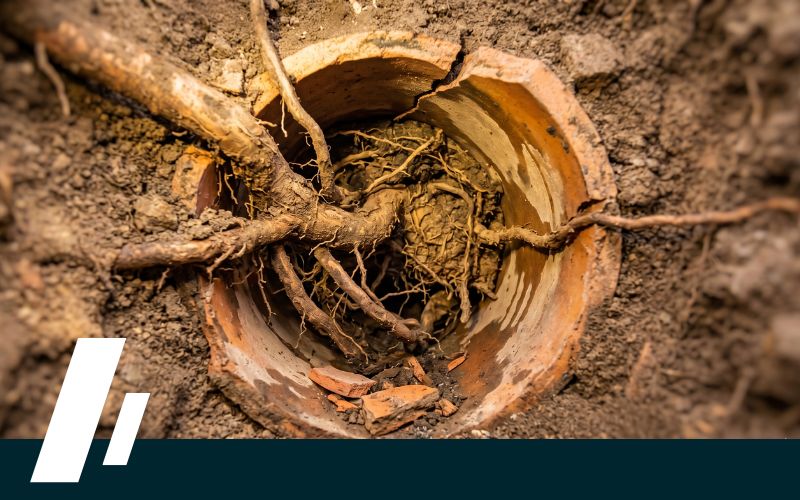
Root-Damaged Pipe
Roots can enter through openings or failed joints and contribute to recurring blockages or further pipe damage.
Offset or Separated Joints
Pipe sections that have shifted can restrict flow and create points where waste repeatedly collects.
Collapsed Pipe
Once a pipe has substantially collapsed, cleaning alone cannot restore its structure.
Recurring Sewer Backups
Repeated backups can be a symptom of a deeper structural problem, particularly when clearing the line only provides temporary relief.
Severely Deteriorated Pipe
A line with significant physical deterioration may require repair or replacement rather than repeated maintenance.
Qualifier:
The presence of any one symptom or defect does not automatically establish that excavation is necessary. Repair recommendations should be based on the condition, location, and overall configuration of the sewer line.
A Repair Method Should Fit the Problem
Dirt Cheap Sewer provides sewer and outdoor plumbing services throughout the greater Seattle area and evaluates sewer problems individually rather than treating every failed line the same way.
The company offers multiple sewer services, including inspections, cleaning and maintenance, trenchless sewer repair, traditional sewer excavation, and sewer line repair and replacement.
That range of options is important because excavation should be one tool among several—not the automatic answer to every sewer problem.
Diagnose First
Understanding the condition of the sewer helps determine what repair is appropriate.
Compare Repair Options
When more than one method is feasible, the advantages and limitations of each can be considered before work begins.
Plan Around the Property
Pipe location, access, depth, surfaces, right-of-way conditions, and the extent of damage can all affect the project.
Find Out Whether Your Seattle Sewer Line Needs Excavation
If you have recurring sewer backups, a damaged pipe, severe offsets, suspected collapse, or another sewer problem that has not been solved by routine cleaning, the next step is determining what is happening inside the line.
Dirt Cheap Sewer can evaluate the problem and determine whether excavation is appropriate or whether another repair method may solve it with less disturbance.
Seattle Sewer Excavation FAQs
Sewer excavation may be necessary when a damaged section needs to be physically exposed in order to repair, replace, reposition, or reconnect the pipe. Examples can include collapsed sections, significant offsets, grade problems, severe deterioration, or conditions that are not suitable for the trenchless method being considered.
A sewer inspection can help determine whether excavation is actually needed.
Dirt Cheap Sewer's existing service information describes excavation as a solution generally reserved for difficult cases after less invasive options have been considered.
However, excavation should not be viewed as inherently worse than trenchless repair. If the pipe needs to be physically repositioned, directly accessed, or replaced under conditions unsuitable for trenchless technology, excavation may be the more appropriate repair.
Sometimes trenchless technologies can address serious sewer defects, but not every collapsed or displaced pipe is a suitable candidate.
The existing pipe condition, amount of deformation, alignment, access, and proposed repair method must be evaluated before determining whether excavation can be avoided.
Side-sewer repair work in Seattle generally requires a side-sewer permit. Additional permitting requirements can apply when work or equipment enters the public right-of-way.
The exact permits required depend on the project location and scope.
Seattle refers to the privately owned line carrying wastewater from the building toward the public sewer as the side sewer. Property-owner responsibility extends along the private side-sewer system to its connection with the public sewer infrastructure.
The precise location of a failure should therefore be identified before assumptions are made about repair responsibility or project scope.
Not necessarily.
The amount of disturbance depends on where the damaged sewer is located, how much of the line needs direct access, equipment requirements, depth, and the repair being completed.
Some problems may allow targeted excavation rather than opening the entire sewer route.
Yes, in some circumstances.
If diagnosis identifies a localized damaged section and the surrounding pipe remains suitable for continued use, targeted excavation may be an option. More widespread deterioration may justify a larger repair or replacement.
Excavation describes the process of physically opening the ground to access the sewer.
Replacement describes what is done with the pipe.
An excavation project may involve replacing a small damaged section or a much larger portion of sewer line depending on its condition.
Diagnosis and sewer locating help identify the route of the line and the area where the defect is occurring.
A sewer camera inspection can also provide information about the type and approximate location of internal defects before excavation is planned.
There is no responsible single price for every sewer excavation because the scope can vary significantly.
Factors may include the amount of sewer being exposed or replaced, depth, location, access, surface materials, permitting, right-of-way involvement, site restoration, and the type of damage found.
Dirt Cheap Sewer's existing excavation service page directs customers toward a project-specific estimate rather than publishing a universal excavation price.
Project duration depends on the extent and location of the repair, permitting requirements, inspections, site access, excavation conditions, and any restoration included in the project.
Avoid publishing a standard turnaround time unless Dirt Cheap Sewer provides a verified range that accurately represents Seattle excavation projects.
Neither method should be chosen solely because one sounds newer or less invasive.
Trenchless repair can reduce digging when the existing pipe and defect are suitable for the technology. Excavation can be more appropriate when the sewer needs direct access, repositioning, grade correction, or repair of conditions that trenchless methods cannot properly address.
A sewer inspection should help establish which method fits the actual problem.
Get the Right Repair for Your Seattle Sewer Line
A serious sewer problem does not always mean the entire yard needs to be excavated, but some failures cannot be properly corrected without reaching the pipe directly.
The important part is knowing the difference.
If your Seattle property is dealing with recurring backups, a known pipe failure, severe root damage, an offset sewer, or another structural problem, Dirt Cheap Sewer can evaluate the line and help determine the appropriate repair method.