

Outdoor and foundation drainage services help move unwanted water away from yards, structures, foundations, walkways, and other areas where poor drainage can create persistent problems. Dirt Cheap Sewer can evaluate drainage concerns in Renton, identify how water is reaching or collecting around your property, and recommend an appropriate drainage solution based on the actual site conditions.
Water does not have to enter your home before it becomes a drainage problem.
Standing water in the yard, constantly saturated soil, overflowing exterior drains, water collecting near the foundation, erosion, and recurring wet areas can all indicate that water is not moving through or away from the property as intended.
The important part is determining why.
An outdoor drainage problem may originate with a clogged pipe, damaged underground drainage line, poor grading, a failing drainage component, concentrated roof runoff, an inadequate discharge route, groundwater, or a combination of conditions.
That is why Dirt Cheap Sewer approaches drainage problems by evaluating the system before recommending the solution.
Signs You May Have an Outdoor Drainage Problem
Some drainage problems are obvious after a major rainstorm. Others develop gradually and may be easy to ignore until water begins affecting landscaping, exterior surfaces, drainage systems, or the structure itself.
Common reasons Renton property owners may need an outdoor drainage evaluation include:
- Standing water that remains in the yard after rainfall
- Soggy or muddy areas that repeatedly return
- Water collecting beside the foundation
- Exterior drains that empty slowly or back up
- Water flowing toward the house rather than away from it
- Downspout drainage that overwhelms the surrounding area
- Soil erosion or channels developing through landscaping
- Water collecting around patios, walkways, or driveways
- Recurring moisture in a crawl space or lower portion of a structure
- Drainage pipes that appear damaged, clogged, or ineffective
- Water surfacing from an underground drainage system
- A section of the property that remains much wetter than surrounding areas
One symptom does not automatically identify the cause.
For example, standing water may indicate that a drain needs cleaning, but it can also result from a damaged pipe, inadequate drainage capacity, improper slope, unsuitable discharge location, or a broader site-drainage problem.
A diagnosis should come before the proposed repair.
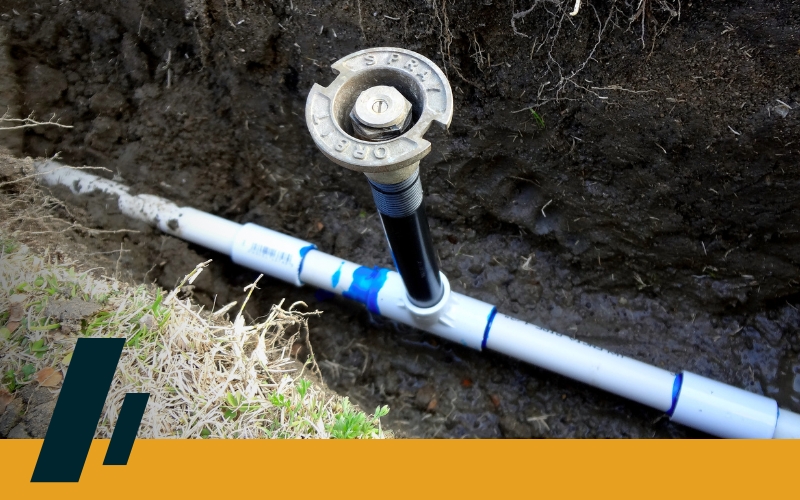
Yard Drainage and Foundation Drainage Solve Different Problems
Although the systems may interact, yard drainage and foundation drainage are not necessarily the same thing.
Yard and Outdoor Drainage
Outdoor drainage systems are generally intended to collect or redirect surface and near-surface water.
Depending on the property and the source of the problem, a drainage system might involve:
- Catch basins
- Yard drains
- Channel drains
- French drains
- Underground drainage piping
- Downspout drainage
- Drainage connections
- Surface-water collection points
- Appropriate discharge or infiltration solutions
The correct option depends heavily on where the water originates and where it can safely and legally go.
Foundation Drainage
Foundation drainage is intended to manage water around the perimeter of a building and reduce the amount of water accumulating against or beneath the foundation.
Depending on the construction and existing drainage system, this may involve footing drains, perimeter drainage, drainage piping, sump-related components, or other subsurface drainage features.
When a foundation drainage system appears to be failing, the goal should not simply be to install another pipe.
The first question is whether the existing system is clogged, damaged, improperly configured, overwhelmed, or experiencing a condition that requires a different approach.
Why Is Water Collecting Around My Renton Property?
Water follows gravity, soil conditions, available drainage paths, and the layout of the property. Solving a recurring drainage problem means identifying which of those factors is contributing to the issue.
Potential causes can include:
Clogged Outdoor Drainage Lines
Soil, roots, organic debris, sediment, and other material can restrict underground drainage pipes.
If the pipe itself remains structurally sound, cleaning may restore proper flow.
Broken or Damaged Drainage Pipe
A line that is cracked, separated, crushed, collapsed, or otherwise damaged may continue causing problems even after cleaning.
In that situation, repairing or replacing the affected section may be necessary.
Improper Drainage Slope
Water cannot reliably move through a gravity drainage system if the piping or surrounding grade does not provide an adequate path.
Cleaning cannot correct a fundamentally improper slope.
Poor Surface Grading
If the surrounding ground directs water toward a structure or low point, an underground drain may only address part of the problem.
Site conditions may need to be considered as part of the overall drainage strategy.
Concentrated Roof Runoff
Roof drainage can send a substantial amount of water into one portion of a property. If downspouts discharge in the wrong area or connect to a system that cannot handle the flow, water may begin collecting near the house or elsewhere on the property.
Inadequate or Failing Foundation Drainage
Older, damaged, blocked, or poorly functioning perimeter drainage can allow excess water to remain around a foundation.
Determining accessibility and the condition of the existing system is important before recommending repair.
Groundwater or Subsurface Water
Not every wet yard originates from rainwater sitting on the surface.
Subsurface water and soil conditions can complicate drainage work and may affect which solutions are appropriate.
Our Diagnosis-First Approach to Drainage Problems
A drainage system works as a whole. Installing a drain in the wettest spot without understanding where the water comes from can simply move the symptom somewhere else.
Dirt Cheap Sewer's approach should begin with the problem itself.
1. Identify Where the Water Is Coming From
The first step is separating surface runoff, roof drainage, subsurface water, foundation drainage, or a drainage-line failure whenever possible.
2. Evaluate the Existing Drainage System
If drainage infrastructure already exists, the next question is whether it is operating correctly.
The condition of accessible drains, pipes, catch basins, discharge routes, and related components can help narrow down the source of the issue.
3. Determine Whether Cleaning Can Solve the Problem
A blockage and a broken pipe require different solutions.
When a drain is structurally usable but obstructed, cleaning may be appropriate. When the drainage system has a physical defect, additional repair may be necessary.
4. Evaluate Repair or Drainage Improvements
Possible recommendations depend on the diagnosis and may include cleaning, targeted repairs, replacement of damaged drainage lines, new collection points, drainage improvements, or installation of a more appropriate system.
5. Determine a Suitable Drainage Route
Collecting water only solves half the problem.
Water also needs an appropriate destination.
Available options vary by property, system design, local requirements, soil conditions, existing infrastructure, and the location of the proposed work.
What Outdoor Drainage Services May Be Appropriate?
There is no single drainage system that works for every Renton property.
Depending on the findings, possible solutions may include:
Drain Cleaning
Cleaning may help when an otherwise functional outdoor drainage line has accumulated sediment, roots, debris, or another obstruction.
Cleaning does not repair a collapsed, badly damaged, improperly sloped, or incorrectly configured pipe.
Drainage Pipe Repair
Localized defects may sometimes be addressed without replacing an entire drainage system.
The appropriate repair depends on the condition, location, material, accessibility, and extent of the damage.
Drainage Line Replacement
A deteriorated or extensively damaged drainage pipe may need replacement when repair or cleaning would not reasonably correct the underlying problem.
French Drains
A French drain can help collect and redirect water moving through saturated soil in certain applications.
However, simply placing a French drain in a wet area does not guarantee that the drainage problem will disappear. The system still needs appropriate placement, slope, construction, and a viable drainage destination.
Catch Basins and Yard Drains
Collection points may help intercept surface water in low areas or locations where runoff repeatedly concentrates.
Their effectiveness depends on proper placement and connection to an appropriate drainage system.
Foundation and Footing Drain Work
Problems involving perimeter or footing drainage may require inspection, cleaning, repair, replacement, or other drainage improvements depending on the accessibility and condition of the existing system.
Downspout and Roof-Drainage Improvements
Redirecting roof water may be part of the solution when downspouts contribute to recurring saturation or water accumulation near the structure.
Drainage Solutions Should Match the Property
Drainage work is unusually site-specific.
Two neighboring homes can experience similar standing-water problems for completely different reasons.
Before recommending a particular system, factors may include:
- Property slope
- Location of the structure
- Existing drainage infrastructure
- Location and depth of underground pipes
- Soil and subsurface conditions
- Location of the problem
- Roof and downspout drainage
- Condition of existing foundation drains
- Available discharge routes
- Nearby utilities
- Easements or rights-of-way
- Accessibility for excavation
- Local permitting requirements
- Interaction with public or private stormwater infrastructure
This is why a contractor should be cautious about prescribing a specific drainage installation before evaluating the property.
Sometimes the answer is a relatively targeted repair.
Other situations may require excavation or a more substantial redesign of the drainage path.
Drainage Work in Renton May Require Additional Planning
Outdoor drainage projects can involve more than installing pipe in the ground.
Depending on what needs to be repaired or changed, the project may interact with stormwater infrastructure, existing utilities, grading, easements, or the public right-of-way.
The City of Renton distinguishes between different types of utility, stormwater, site-work, and right-of-way activity, so the permitting requirements for one drainage project may not be the same as those for another.
That makes it important to establish the proposed scope before assuming what permits, approvals, or system connections may apply.
For homeowners, the practical takeaway is simple:
Diagnose the drainage problem first, develop the appropriate scope second, and verify any applicable requirements before construction begins.
Outdoor Drainage Problems Can Overlap With Sewer Problems
Water outside the house does not necessarily mean there is a problem with the sanitary sewer, and a sewer backup does not necessarily mean the yard needs a drainage system.
However, underground systems can exist close to one another, and symptoms sometimes overlap.
If wastewater is involved, the issue should be treated as a sewer or plumbing problem rather than ordinary stormwater drainage.
A proper diagnosis helps distinguish between:
- Sanitary sewer problems
- Stormwater drainage problems
- Foundation drainage
- Roof and downspout drainage
- Yard drainage
- Water service leaks
- Groundwater or subsurface moisture
That distinction matters because each problem requires a different solution.
How Much Does Outdoor Drainage Work Cost in Renton?
The cost of correcting a drainage problem depends heavily on what is actually wrong.
Rather than giving a generic drainage-system price that may have little relationship to the property, useful cost factors include:
- Type of drainage problem
- Whether an existing system can be repaired
- Length and depth of piping involved
- Accessibility
- Amount of excavation required
- Condition of existing drainage lines
- Number and type of collection points
- Foundation access
- Soil and groundwater conditions
- Surface restoration requirements
- Utility conflicts
- Permitting or inspection requirements
- Whether the project requires a new drainage route
A clogged drain and a failed foundation drainage system are fundamentally different projects.
An inspection and diagnosis provide a better basis for discussing scope and cost than selecting a drainage product first and trying to make the property fit the solution.
Why Call Dirt Cheap Sewer for a Drainage Problem?
Outdoor drainage often crosses the boundary between simple drain cleaning and underground utility work.
Dirt Cheap Sewer can evaluate the underground side of the problem and determine whether the issue points toward cleaning, damaged piping, excavation, drainage improvement, or another service.
That means the conversation can begin with:
“Why is this area staying wet?”
rather than:
“Which drainage product can we install here?”
The goal is to identify the problem accurately enough to recommend a solution that makes sense for the property.
If conditions reveal that another type of specialist, design, approval, or scope is needed, that should be identified rather than forcing the property into a repair that does not address the actual cause.
Outdoor & Foundation Drainage FAQs
There is no universally best yard drainage system. The appropriate solution depends on where the water originates, how it moves across or through the property, existing drainage infrastructure, soil conditions, property slope, and where the collected water can appropriately go. A French drain may be useful in one situation while a catch basin, pipe repair, grading correction, or another approach may be more appropriate in another.
Sometimes. If the drainage line is accessible and remains structurally functional, cleaning may help restore flow. If the pipe has collapsed, separated, deteriorated, or developed another structural defect, cleaning alone will not correct the problem.
Water can collect near a foundation because of surface grading, roof runoff, blocked drainage, damaged footing drains, poorly functioning underground piping, groundwater, or a combination of factors. Identifying the water source is an important first step before deciding what needs to be installed or repaired.
Possibly, but a French drain should not be treated as the automatic answer to every wet yard. Its usefulness depends on the source of the water, soil conditions, placement, slope, and the availability of a suitable drainage destination.
Depending on the drainage system, accessibility, condition, and required scope, underground drainage lines may be candidates for cleaning, repair, or replacement. The appropriate approach should be determined after evaluating the problem.
It depends on the project. Work that modifies or connects to utility or stormwater systems, involves certain site work, or extends into the public right-of-way can have additional requirements. The applicable requirements should be verified for the specific scope before work begins.
It may help when exterior drainage is contributing to the moisture problem, but water intrusion can have multiple causes. Drainage work should not be presented as a guaranteed solution until the source of the water has been identified.
Solve the Cause of Your Renton Drainage Problem
A wet yard, overflowing exterior drain, or water collecting against the foundation is a symptom.
The goal is to determine what is producing that symptom.
Whether the problem involves a clogged drainage pipe, damaged underground line, failing foundation drainage, concentrated runoff, or a larger drainage issue, Dirt Cheap Sewer can help evaluate the situation and determine what type of solution makes sense.