

Water should move away from your home, foundation, driveway, and other structures—not collect beside them.
When drainage around a property is not working correctly, Kent homeowners may notice standing water in the yard, persistently soggy soil, runoff flowing toward the house, overflowing drainage areas, or moisture appearing where it should not.
Dirt Cheap Sewer provides outdoor and foundation drainage services in Kent, WA, helping property owners determine where unwanted water is coming from, why it is accumulating, and what type of drainage work may be appropriate.
The right solution depends on the source of the water. A clogged exterior drain may require cleaning. A damaged underground drainage pipe may require repair. Poor grading, improperly routed downspouts, groundwater, or inadequate drainage infrastructure may call for a different approach entirely.
That is why a useful drainage solution starts with understanding the problem instead of assuming every wet yard needs the same system.
Dealing with standing water or drainage problems around your Kent property? Contact Dirt Cheap Sewer to discuss the problem and determine the next step.
Outdoor Drainage Problems Can Have Several Different Causes
A puddle after a heavy rain does not automatically mean an underground pipe has failed.
Outdoor drainage problems can result from several conditions occurring individually or together.
Common possibilities include:
- Surface runoff collecting in low areas
- Soil that drains slowly
- Improper property grading
- Downspouts releasing water too close to the foundation
- Clogged outdoor drain lines
- Broken or separated drainage piping
- Roots interfering with buried drainage lines
- Debris blocking catch basins or drainage structures
- Groundwater moving through the surrounding soil
- Existing drainage systems that no longer handle water effectively
Identifying the source is important because fixing the wrong problem can leave the original drainage issue unchanged.
For example, installing additional underground drainage may do little good when most of the water is coming from a downspout that simply needs to be redirected. Likewise, surface grading changes may not solve a buried pipe that has collapsed.
Dirt Cheap Sewer approaches exterior drainage with that distinction in mind.

Signs You May Have an Outdoor Drainage Problem
Some drainage issues are obvious. Others develop slowly and become more noticeable as water continues following the same path across the property.
Signs worth investigating include:
Standing Water in the Yard
Water that remains long after surrounding areas have dried can indicate poor surface drainage, low spots, compacted soil, or a drainage system that is not moving water effectively.
Persistent Soggy Areas
Ground that stays soft, muddy, or saturated may indicate that water is continuously collecting in that location.
Water Moving Toward the House
Runoff should generally be directed away from structures. Water repeatedly flowing toward the foundation deserves attention.
Pooling Near the Foundation
Water collecting beside the house can increase the amount of moisture present around the foundation and crawlspace area.
Overflowing Catch Basins or Yard Drains
An exterior drain that fills or overflows during rainfall may have a blockage, restricted outlet, damaged line, or insufficient capacity.
Downspout Drainage Problems
Downspouts connected to underground piping can become clogged or damaged. If water backs up around a downspout connection, the buried line may need evaluation.
Erosion or Washed-Out Landscaping
Concentrated runoff can remove soil, mulch, gravel, or landscaping material and may point toward an uncontrolled water path.
Water Appearing Where It Previously Did Not
A newly developing wet area may indicate that something has changed underground, uphill, or elsewhere on the property.
These symptoms provide useful clues, but they do not always identify the cause by themselves.
Foundation Drainage Services in Kent
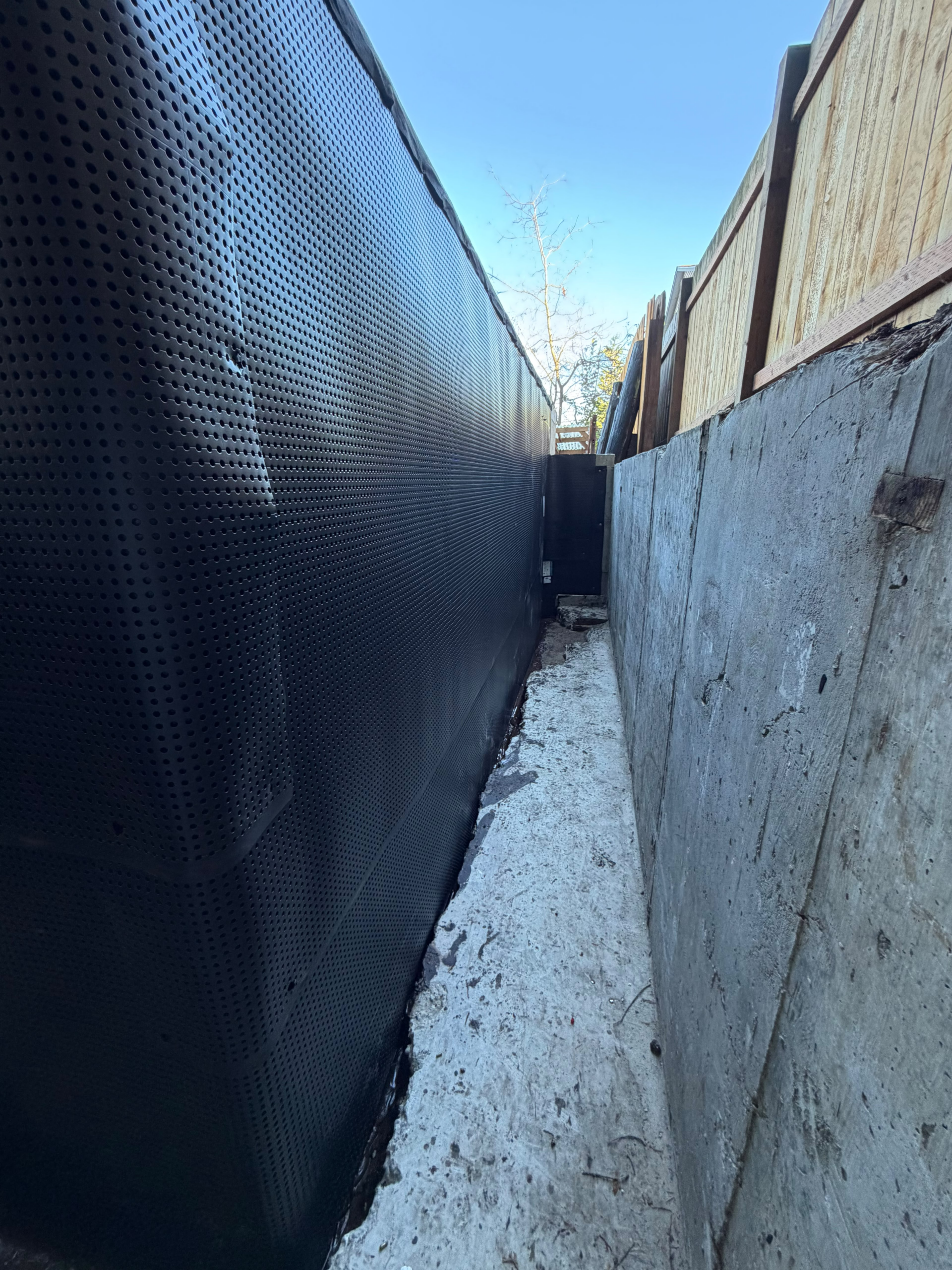
Foundation drainage is intended to manage water around a structure so moisture does not continually collect against or beneath the building.
Depending on how a property was constructed, drainage around the foundation can involve several different components.
These may include:
- Perimeter drainage
- Footing drains
- Foundation drains
- Drainage piping
- Gravel drainage zones
- Downspout connections
- Catch basins
- Surface drainage
- Sump systems
- Discharge piping
Not every property uses the same design, and problems that appear to involve foundation drainage may actually originate somewhere else.
For that reason, Dirt Cheap Sewer focuses first on determining how water is reaching the affected area and how the existing system is expected to move it away.
Why Water Around a Foundation Matters
Water naturally follows gravity and paths of least resistance.
When drainage around a structure is inadequate, moisture may continually collect in soil beside the foundation rather than moving away from it.
Depending on the property and the source of the water, this may contribute to problems such as:
- Damp soil beside the home
- Crawlspace moisture
- Water entering low areas
- Soil erosion
- Persistent puddling
- Saturated landscaping
- Drainage structures that remain full
- Water appearing around basement or foundation areas
Drainage work cannot correct every possible source of foundation moisture. Plumbing leaks, waterproofing failures, groundwater conditions, roofing problems, and structural issues can produce similar symptoms.
A drainage evaluation should therefore focus on identifying the likely water source before choosing a repair.
Yard and Landscape Drainage Solutions
Outdoor drainage systems can be designed to collect water from areas where it naturally gathers and redirect it toward an appropriate discharge point.
The system that makes sense depends on the layout of the property.
Potential drainage components can include:
French Drains
A French drain generally uses perforated piping surrounded by drainage material to collect water moving through saturated soil.
French drains can be useful in certain situations, but they are not automatically the correct solution for every wet yard.
Catch Basins
Catch basins collect surface water at specific low points and direct it into underground drainage piping.
They can be helpful where water consistently gathers in a predictable location.
Area Drains
Area drains can collect runoff from patios, walkways, landscaping, or other exterior surfaces.
Solid Drainage Pipe
Solid piping may be used when collected water needs to be transported from one location to another without allowing water to enter or leave the pipe along the route.
Downspout Drainage
Downspouts may connect to underground piping that carries roof runoff farther away from the building.
When those pipes clog, break, or separate, water may surface near the home instead.
Drainage Channel Systems
Certain paved areas may benefit from channel-style drains that intercept water crossing driveways, patios, or other hard surfaces.
The correct drainage layout depends on elevation, soil conditions, existing infrastructure, discharge options, and where the water is coming from.
Downspout and Underground Drainage Problems
Underground downspout lines are easy to overlook because much of the system is hidden.
When functioning properly, they help move roof runoff away from the immediate foundation area.
When something goes wrong, symptoms may include:
- Water backing up where the downspout enters the ground
- Overflow during rainfall
- Water surfacing elsewhere in the yard
- Soggy areas along the buried pipe route
- Slow drainage
- Water remaining inside a catch basin
- Visible damage near an outlet
The cause may be debris, roots, pipe deterioration, a separated connection, improper slope, or another obstruction.
Where appropriate, cleaning or inspection may help determine whether the line can be restored or whether a damaged section requires repair.
If the problem appears to involve a clogged exterior line, Dirt Cheap Sewer's drain cleaning and line maintenance services in Kent may also be relevant.
Cleaning an Existing Drain vs. Installing New Drainage
Not every drainage problem requires a new system.
In some cases, the property already has drainage infrastructure—it simply is not functioning properly.
An existing system may need attention when:
- Catch basins are full of sediment
- Underground piping has become clogged
- Roots have entered a drainage line
- A pipe has separated
- Part of a line has collapsed
- An outlet is blocked
- Debris has accumulated inside the system
When the existing system is fundamentally appropriate for the property, cleaning or repairing it may make more sense than replacing everything.
New drainage becomes more relevant when the property does not have an effective system in the area experiencing the problem or when the existing layout no longer provides a practical solution.
The goal should be to correct the actual drainage failure rather than automatically choosing the largest project.
How Dirt Cheap Sewer Approaches Drainage Problems
A drainage project should begin with understanding how water behaves on the property.
1. Discuss the Symptoms
The first step is identifying what you are seeing and when it occurs.
Does the yard stay wet continuously? Does the problem appear only during heavy rain? Is water collecting beside the foundation? Is a particular drain overflowing?
Those details help narrow the possibilities.
2. Evaluate the Affected Area
The surrounding property can provide important clues.
Low areas, drainage structures, downspouts, slopes, visible outlets, hardscaping, and existing underground systems may all influence where water travels.
3. Identify the Likely Source
Before recommending work, the objective is to distinguish between issues such as:
- Surface runoff
- A clogged drain
- A damaged pipe
- Groundwater
- Downspout discharge
- Poor grading
- An inadequate existing drainage system
4. Determine an Appropriate Drainage Strategy
Once the likely cause is understood, the recommended work can focus on that problem.
Depending on the situation, this might involve cleaning, repairing, replacing, rerouting, or adding drainage infrastructure.
5. Complete the Necessary Work
The amount of excavation and disruption depends on the system being repaired or installed.
When underground access is required, the work should be limited to what is reasonably necessary for the selected drainage solution.
6. Confirm Water Has a Practical Path Away
A drainage system needs somewhere appropriate to discharge.
Where and how water can legally and effectively be directed depends on the property, existing systems, and applicable local requirements.
Outdoor Drainage and Sewer Problems Are Not the Same Thing
Standing water outdoors does not necessarily mean there is a sewer problem.
A property's sanitary sewer system carries wastewater from plumbing fixtures. Exterior drainage systems are generally intended to manage rainwater, groundwater, roof runoff, and surface water.
The two systems serve different purposes.
That distinction matters when diagnosing a problem.
If the symptoms include sewage odors, wastewater backing up inside the home, repeated plumbing backups, or suspected problems with the property's sanitary sewer lateral, Dirt Cheap Sewer's sewer inspection services in Kent may be a more appropriate starting point.
If inspection identifies a damaged sewer line, sewer line repair and replacement in Kent or trenchless sewer repair in Kent may become relevant.
When Excavation May Be Necessary
Many outdoor drainage systems are buried underground.
As a result, excavation may be necessary when:
- Installing new drainage pipe
- Adding catch basins
- Replacing damaged lines
- Rebuilding failed drainage sections
- Correcting improperly routed piping
- Accessing buried foundation drainage
- Replacing collapsed drainage infrastructure
The amount of excavation depends heavily on the depth, location, access, soil conditions, and type of system involved.
For projects requiring substantial underground access, Dirt Cheap Sewer also provides sewer excavation services in Kent for applicable sewer-related work.
Drainage excavation and sewer excavation are not necessarily identical projects, but experience working around underground exterior systems can be relevant when determining how access should be approached.
Kent Properties Can Have Different Drainage Challenges
Drainage problems are highly property-specific.
Even neighboring homes may handle water differently because of differences in:
- Lot elevation
- Landscaping
- Soil
- Retaining walls
- Driveways
- Roof drainage
- Property grading
- Previous construction
- Existing drainage infrastructure
- Development age
- Surrounding properties
One home may experience water collecting beside the foundation while another has runoff crossing a driveway or settling in the backyard.
That is why duplicating a drainage design from another property without evaluating the site can produce disappointing results.
The system needs to address how water actually behaves on the individual property.
Residential Outdoor and Foundation Drainage
Residential drainage problems can affect many parts of a property.
Dirt Cheap Sewer can evaluate drainage concerns involving areas such as:
- Yards
- Foundations
- Crawlspace-adjacent areas
- Driveways
- Walkways
- Patios
- Downspouts
- Landscape beds
- Catch basins
- Exterior drain lines
- Underground drainage piping
The objective is to identify the water source and determine whether the existing drainage can be restored or whether another solution is appropriate.
How Much Does Outdoor Drainage Work Cost?
There is no useful single price for outdoor or foundation drainage because drainage projects can vary substantially.
Cost may depend on factors such as:
- Type of drainage problem
- Length of piping
- Depth of excavation
- Number of drains or catch basins
- Accessibility
- Surface materials
- Soil conditions
- Existing underground utilities
- Amount of repair required
- Whether an existing system can be reused
- Discharge requirements
- Restoration after excavation
A clogged drain line and a newly installed foundation drainage system are fundamentally different projects.
The most reliable way to determine the scope is to evaluate the actual drainage problem first.
When Should You Call About a Drainage Problem?
Drainage issues are worth investigating when they repeatedly place water somewhere it should not be.
Consider having the property evaluated when:
- Standing water regularly remains after storms
- Water repeatedly collects beside the foundation
- An exterior drain frequently backs up
- Downspout piping overflows
- Previously dry areas have become consistently wet
- Runoff is causing erosion
- Water is entering a crawlspace or other low area
- You suspect an underground drainage line has failed
You do not need to know which drainage system you need before calling.
Determining the cause is part of the process.
Why Work With Dirt Cheap Sewer for Exterior Drainage?
Outdoor drainage frequently overlaps with underground piping, excavation, sewer infrastructure, and other exterior utility work.
That makes careful diagnosis especially important.
Dirt Cheap Sewer's approach is to identify the problem before recommending the repair rather than treating every water issue as though it has the same cause.
For Kent property owners, that means starting with questions such as:
- Where is the water coming from?
- Where should it be going?
- Is an existing drain present?
- Is that drain clogged or damaged?
- Is the problem above ground or underground?
- Does the foundation drainage appear involved?
- Would cleaning restore the existing system?
- Is repair or additional drainage necessary?
Those answers help define a practical scope of work.
Frequently Asked Questions About Outdoor and Foundation Drainage in Kent
Standing water can result from low areas, slow-draining soil, improper grading, concentrated runoff, clogged drainage systems, damaged underground pipes, or groundwater. Determining where the water is coming from is the first step toward selecting an appropriate solution.
Yes. Underground downspout piping can accumulate debris or develop root intrusion, damage, separation, or other restrictions. Backups where a downspout enters the ground can be a sign that the underground system needs evaluation.
In many situations, existing foundation or perimeter drainage may be repairable, but the appropriate approach depends on the system, accessibility, and type of failure. Inspection of the affected area is necessary before determining whether repair, cleaning, partial replacement, or another solution makes sense.
Possible causes include roof runoff, poor grading, clogged drains, damaged underground drainage lines, groundwater, or an inadequate drainage system. Because several conditions can produce similar symptoms, the source should be identified before choosing a repair.
Some do. Underground pipe repairs, new drains, catch basins, and foundation drainage work may require excavation. Other problems may be resolved by cleaning or repairing accessible components. The amount of digging depends on the specific drainage problem.
No. A sanitary sewer carries wastewater from the property's plumbing system. Outdoor drainage typically manages rainwater, groundwater, roof runoff, or surface water. Determining which system is involved is important when diagnosing the problem.
Need Help With an Outdoor Drainage Problem in Kent?
Standing water, overflowing outdoor drains, foundation moisture, and persistent soggy areas are symptoms—not diagnoses.
The next step is determining why the water is there and where it should be going.
Dirt Cheap Sewer provides outdoor and foundation drainage services in Kent, helping property owners evaluate drainage problems and determine whether cleaning, repair, replacement, rerouting, or additional drainage work may be appropriate.