

Standing water in your yard, soggy landscaping, and moisture collecting near your foundation can indicate that rainwater or groundwater is not draining properly. Left unresolved, these conditions may contribute to soil erosion, landscape damage, and moisture-related problems around your home.
Dirt Cheap Sewer provides outdoor and foundation drainage services in Burien, WA, helping homeowners and property owners identify drainage problems and find practical ways to manage water around their properties.
From recurring puddles near driveways to saturated soil along foundation walls, drainage problems can have several causes. An existing underground drain may be clogged or damaged, downspouts may discharge water in the wrong location, or the property's grading may direct runoff toward areas where it cannot drain effectively.
Our approach begins with understanding where the water originates, how it moves across the property, and what prevents it from draining properly. Depending on those findings, the solution may involve repairing an existing drainage line, installing additional drainage components, or improving how water is collected and redirected.
If your Burien property experiences recurring drainage problems, Dirt Cheap Sewer can help you evaluate the conditions and determine an appropriate next step.
Understanding Outdoor Drainage Challenges in Burien
Burien's location in the Puget Sound region makes managing rainfall and surface runoff an important consideration for residential properties. The area's wet seasons, varied terrain, and developed landscapes can create conditions where water accumulates rather than moving away from buildings and outdoor living spaces.
The City of Burien includes areas with relatively level terrain, natural depressions, and slopes descending toward Puget Sound. These differences in elevation influence how rainwater travels across individual properties. Water may collect in low areas, move downhill toward structures, or contribute to soil erosion where runoff becomes concentrated.
Soil conditions are another consideration. Parts of the Burien area contain glacially deposited soils with varying drainage characteristics. Some soils allow water to infiltrate relatively easily, while others restrict infiltration or retain moisture for extended periods.
Roof surfaces, driveways, patios, and other paved areas also affect drainage. Because these surfaces prevent rainwater from soaking directly into the ground, runoff must travel somewhere else. If downspouts, grading, or underground drainage systems do not manage that water effectively, it may accumulate around foundations, walkways, and landscaped areas.
These conditions do not affect every Burien property in the same way. The appropriate drainage solution depends on the site's elevation, soil characteristics, existing infrastructure, and available discharge locations.
A property-specific evaluation helps distinguish between a localized drainage problem and a broader issue involving surface runoff, groundwater, or underground piping.
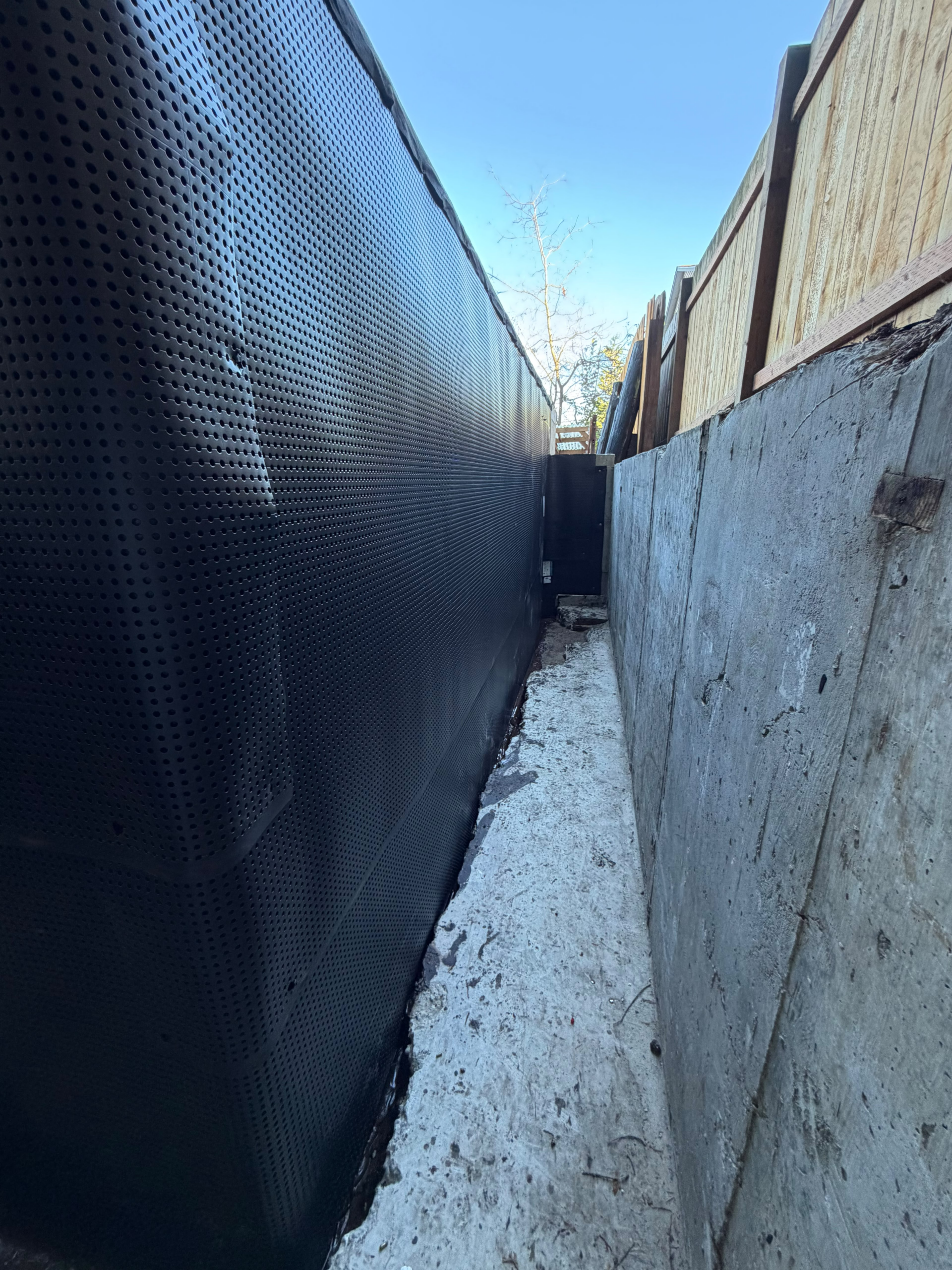
Signs Your Property May Need Outdoor Drainage Improvements
Drainage problems are not always obvious until prolonged rainfall exposes them. Some appear as standing water after a storm, while others develop gradually through changes in soil conditions, landscaping, and moisture around the building.
Common warning signs include:
Standing water in the yard that remains long after rainfall.
Soft, muddy, or consistently saturated patches of grass.
Water pooling alongside foundation walls.
Dampness or water intrusion in basements and crawl spaces.
Soil erosion around landscaping, walkways, or retaining walls.
Water flowing toward the house rather than away from it.
Overflowing catch basins or drainage grates.
Downspouts that discharge large amounts of water near the foundation.
Persistent puddles along driveways, patios, or sidewalks.
Mulch, gravel, or topsoil repeatedly washing away.
Underground drainage lines that back up during heavy rainfall.
Water emerging from the ground in an unexpected location.
The timing of these symptoms can provide useful clues. Water that appears only during heavy rainfall may indicate surface runoff or overwhelmed drainage components. A persistently wet area may involve groundwater, poor soil drainage, or a damaged underground line.
Moisture appearing during dry weather may point to a plumbing or water service line problem rather than ordinary stormwater runoff.
Not every damp area requires extensive drainage installation. Identifying the underlying cause helps avoid unnecessary excavation and allows repairs or improvements to focus on the actual problem.
Outdoor and Foundation Drainage Solutions for Burien Properties
Effective outdoor drainage involves more than removing visible puddles. Water must be collected, conveyed, and discharged in a way that addresses the original problem without creating additional drainage concerns elsewhere.
Dirt Cheap Sewer evaluates outdoor drainage conditions and identifies suitable solutions based on the property's layout, existing systems, and the source of the unwanted water.
Several drainage methods may be considered depending on the circumstances.
French Drain Systems
French drains are designed to collect water moving through saturated soil and redirect it through an underground drainage pathway.
A typical French drain consists of perforated drainage pipe surrounded by gravel or other suitable drainage material. As subsurface water enters the system, it travels toward an appropriate outlet.
French drains may help address recurring saturation in landscaped areas, wet sections of a yard, or subsurface water moving toward a building.
However, their effectiveness depends on proper placement, soil conditions, pipe slope, depth, and the availability of a suitable discharge location. A French drain is not necessarily the best solution for water that primarily flows across the ground surface.
Foundation Drainage Systems
Foundation drainage systems help manage water accumulating near the base of a building.
Depending on the structure, existing foundation drainage may include underground perimeter piping designed to collect water and carry it away from foundation walls and footings.
When these systems become obstructed, damaged, or unable to discharge effectively, moisture can accumulate in surrounding soil.
Potential solutions may include repairing damaged drainage components, clearing accessible obstructions, or improving the drainage pathway. More substantial work may be necessary when the existing system is missing, deteriorated, or improperly configured.
Foundation drainage improvements address water management around the building. They are not a substitute for structural foundation repairs or specialized waterproofing when those services are necessary.
Catch Basins and Yard Drains
Catch basins and yard drains collect surface water at locations where runoff naturally gathers.
These drainage components are commonly considered for low areas in lawns, paved surfaces, or landscaping where standing water repeatedly develops.
Collected water enters an underground drainage pipe that conveys it toward an appropriate discharge point.
Proper placement is important. A drain installed outside the actual collection area may do little to address the problem, while an outlet that cannot handle the expected flow may allow water to back up.
Existing catch basins may also need cleaning, repairs, or modifications when sediment, debris, or damaged connections interfere with drainage.
Downspout and Underground Drainage Lines
Roof runoff can contribute significant amounts of water to the ground surrounding a house.
When gutters and downspouts discharge directly beside foundation walls, concentrated water may saturate the soil and contribute to recurring moisture problems.
Underground downspout drainage lines can provide a way to convey roof runoff away from vulnerable areas when a suitable route and discharge location are available.
Existing lines may also develop problems from accumulated debris, root intrusion, pipe separation, or underground damage.
An evaluation can help determine whether a line needs cleaning, repair, replacement, or a different drainage arrangement.
Drainage Pipe Repair and Replacement
Underground drainage systems can lose effectiveness when pipes crack, collapse, become obstructed, or separate at their connections.
These problems may cause water to back up, surface unexpectedly, or remain trapped in saturated soil.
When the existing drainage layout remains suitable, repairing an isolated damaged section may restore proper operation without replacing the entire system.
More extensive replacement may be necessary when multiple sections are deteriorated, the existing pipe arrangement is ineffective, or the system cannot carry collected water to an appropriate outlet.
The extent of the work depends on the pipe's condition, accessibility, and the overall drainage design.
How We Evaluate Outdoor Drainage Problems
A recurring drainage problem does not always have a single obvious cause. Water that appears beside a foundation, for example, might originate from roof runoff, surrounding grading, underground seepage, or a damaged drainage connection.
Dirt Cheap Sewer evaluates the affected area to better understand the conditions contributing to the problem.
The evaluation may include examining:
The locations where standing water or saturated soil develops.
The direction surface runoff travels during rainfall.
The slope and grading of the surrounding property.
Existing catch basins, yard drains, and drainage connections.
Downspout discharge locations and underground runoff lines.
Visible signs of damaged or obstructed drainage piping.
Soil conditions and areas of potential groundwater accumulation.
The relationship between drainage systems and nearby foundations.
Potential discharge locations and restrictions affecting their use.
Access limitations that may influence excavation or repairs.
Where underground piping is accessible and conditions warrant it, additional investigation may help identify blockages or structural defects.
The objective is to determine whether an existing system can be restored, whether additional water collection is needed, or whether the property would benefit from a different drainage arrangement.
This distinction matters because installing more pipe does not necessarily resolve a problem caused by poor grading, an unsuitable outlet, or water arriving from another part of the property.

Repairing Existing Drainage Systems vs. Installing New Drainage
When drainage problems develop, installing an entirely new system is not always necessary.
If the property already has a drainage system serving the affected area, the first consideration is whether that system can still function as intended.
Repairs or maintenance may be appropriate when:
An accessible drainage pipe is obstructed by sediment or debris.
A catch basin or drainage connection has become damaged.
A limited section of underground pipe needs replacement.
The existing drainage route remains effective.
The discharge location is functional and appropriate.
Localized damage is preventing an otherwise suitable system from operating.
A new or redesigned drainage system may be considered when:
No drainage infrastructure serves the affected area.
The existing system does not collect water where it accumulates.
Multiple underground components have failed.
The property lacks an effective drainage route.
Changes to landscaping or paved surfaces have altered runoff patterns.
Existing drainage improvements would not address the underlying cause.
The choice between repair and replacement depends on what the evaluation reveals.
Whenever a focused repair can address the problem effectively, it may reduce the amount of excavation and landscape disruption compared with a larger installation.
Foundation Drainage and Moisture Around Your Home
Water accumulating around a home's foundation deserves attention, especially when it happens repeatedly during wet weather.
As soil becomes saturated, moisture can remain in contact with foundation walls for extended periods. Depending on the structure and site conditions, this may contribute to seepage, increased moisture in below-grade spaces, or additional pressure from water in the surrounding soil.
Exterior warning signs may include puddles alongside the house, erosion near foundation walls, or runoff flowing toward the building.
Inside the home, damp basement walls, crawl-space moisture, or recurring water intrusion may indicate that exterior drainage conditions need further investigation.
However, not every foundation moisture problem originates with outdoor drainage. Plumbing leaks, groundwater conditions, waterproofing deficiencies, and structural issues can produce similar symptoms.
An effective solution begins with identifying the source of the moisture rather than assuming that a French drain or perimeter drain will resolve every condition.
When an issue involves structural damage or specialized waterproofing, an evaluation by the appropriate qualified professional may also be necessary.
Drainage Considerations for Sloped and Low-Lying Burien Properties
Burien's varied topography creates different drainage considerations depending on where a property is located.
On a sloped property, runoff may move quickly across the ground or concentrate along landscaping, retaining walls, and changes in elevation. If water repeatedly travels through the same area, it can carry away exposed soil and contribute to erosion.
On flatter properties or those containing natural depressions, rainwater may collect because there is insufficient slope to direct it toward an outlet.
Properties with poorly draining soils may experience prolonged saturation even when obvious surface puddles are absent.
These differences affect the types of drainage improvements that may be practical.
A gravity-fed drainage system requires enough elevation difference to carry water toward an acceptable discharge location. Where sufficient slope is unavailable, other water-management options may need consideration.
Properties near steep slopes, wetlands, streams, or other environmentally sensitive areas can involve additional drainage restrictions and engineering considerations.
Moving collected water to another part of the property is not automatically a suitable solution. The proposed discharge location must be appropriate for the site and must account for potential effects on neighboring properties, slopes, and surrounding drainage systems.
What Affects the Scope of an Outdoor Drainage Project?
The amount of work required for outdoor drainage improvements varies considerably between properties.
A localized blockage in an accessible drainage line may call for a relatively focused repair. Installing a new drainage system around a foundation or across a large section of landscaping can involve considerably more planning and excavation.
Factors influencing the project scope include:
The source and volume of unwanted water.
The size of the affected area.
Soil composition and groundwater conditions.
The depth and length of proposed drainage piping.
The condition of existing underground drains.
Access for excavation and equipment.
Nearby utility lines and other underground infrastructure.
Driveways, patios, retaining walls, and landscaping.
The presence of tree roots or established vegetation.
The availability of an appropriate drainage outlet.
Property boundaries and applicable easements.
Restoration requirements after excavation.
Applicable permit, inspection, or engineering requirements.
Drainage work in Burien may also be subject to municipal stormwater requirements depending on the nature of the project, particularly when work involves grading, new discharge arrangements, or environmentally sensitive areas.
A property-specific evaluation helps establish the necessary work and identify potential complications before a proposed solution is selected.
What Determines the Cost of Outdoor and Foundation Drainage Services?
The cost of outdoor drainage work depends on the problem being addressed and the improvements needed to resolve it.
Cleaning an existing drain, repairing damaged piping, and constructing a new foundation drainage system are different types of projects with different material, labor, and excavation requirements.
Important cost considerations include the length of the drainage route, excavation depth, site accessibility, soil conditions, pipe materials, the number of collection points, and the amount of surface restoration involved.
The location of a suitable drainage outlet can also influence the work. A drainage line that must travel farther across a property or navigate existing landscaping and hard surfaces may involve additional excavation and materials.
If underground damage or unexpected site conditions are discovered, the proposed scope may need adjustment.
An on-site evaluation allows Dirt Cheap Sewer to examine the drainage problem, discuss appropriate options, and provide an estimate based on the actual work involved.
Why Choose Dirt Cheap Sewer for Outdoor Drainage in Burien?
Outdoor drainage problems often involve more than the visible water collecting above ground.
A wet lawn, overflowing drain, or damp foundation may be connected to underground piping, surface grading, downspout drainage, or other exterior plumbing components.
Dirt Cheap Sewer specializes in sewer and outdoor plumbing services, providing experience with the underground systems that help move water around residential properties.
Our approach emphasizes understanding the problem before recommending a repair or installation.
Property-Focused Drainage Evaluations
Every property has different drainage characteristics. We consider existing infrastructure, water movement, and site limitations rather than assuming that one drainage method will work everywhere.
Practical Repair and Installation Options
When an existing drainage system can be repaired, that option deserves consideration. When the original system is unsuitable or no longer functional, a more substantial improvement may be necessary.
Outdoor Plumbing Expertise
Problems involving buried pipes, drainage connections, and underground infrastructure benefit from an understanding of how exterior plumbing systems operate and interact.
Clear Explanations of the Work
Understanding why a drainage improvement is recommended helps property owners make informed decisions. We aim to explain the observed problem, available approaches, and factors that may affect the work.
Service Throughout Burien
Dirt Cheap Sewer travels to properties throughout Burien to evaluate and address sewer and outdoor plumbing concerns.
Whether you are dealing with recurring standing water, a damaged underground drain, or moisture collecting around your foundation, our goal is to help identify a practical path toward better drainage.
Outdoor Drainage and Underground Plumbing Problems
Not every unexplained wet spot is caused by rainwater or groundwater.
Damaged sewer pipes, leaking water service lines, and obstructed underground drainage systems can create symptoms that resemble ordinary yard drainage problems.
For example, a consistently saturated patch of soil during dry weather may warrant investigation for a buried plumbing leak. Unpleasant sewer odors, sewage backups, or wastewater surfacing in the yard can indicate a sewer-related problem rather than a stormwater drainage issue.
Determining which system is responsible is important because the appropriate repair methods differ.
Dirt Cheap Sewer also provides related services, including:
Drain Cleaning and Line Maintenance: Clearing obstructions and maintaining underground drainage and sewer piping.
Sewer Inspection: Investigating potential defects or blockages within sewer lines.
Sewer Line Repair and Replacement: Addressing damaged or deteriorated sewer piping.
Sewer Excavation: Accessing buried sewer infrastructure when excavation is necessary.
Outdoor Plumbing Services: Evaluating underground plumbing concerns outside the building.
Learn more about our outdoor and foundation drainage services:
https://dirtcheapsewer.com/services/outdoor-foundation-drainage/
Explore our sewer and outdoor plumbing services:
Frequently Asked Questions About Outdoor and Foundation Drainage in Burien
Persistent wet areas can result from poorly draining soil, insufficient surface grading, groundwater accumulation, concentrated roof runoff, or an obstructed underground drainage system.
In Burien, seasonal rainfall and differences in soil and terrain can influence how quickly water drains from a property.
If the same area remains saturated after repeated storms, evaluating the water source and existing drainage conditions can help determine whether improvements are necessary.
A French drain may help when the main problem involves water accumulating within the soil. However, surface runoff collecting in a low spot may be better addressed by a catch basin, surface drain, or another suitable drainage method.
The correct approach depends on soil conditions, site grading, the source of the water, and the availability of an appropriate outlet.
A drainage evaluation can determine whether a French drain is a suitable option for your property.
Yes. Water repeatedly accumulating around foundation walls may contribute to moisture intrusion in basements and crawl spaces, particularly when surrounding soil becomes saturated.
However, interior moisture can have several causes, including plumbing leaks, groundwater conditions, and waterproofing or structural deficiencies.
Evaluating both the exterior drainage conditions and the location of the moisture helps determine whether outdoor drainage improvements are likely to address the problem.
In some cases, yes. If an existing pipe is structurally sound but obstructed, cleaning may restore drainage. A pipe with localized damage may be suitable for a targeted repair.
Replacement may be necessary when piping has collapsed, deteriorated extensively, or cannot drain effectively because of its original layout.
The most appropriate option depends on the condition of the pipe and the cause of the drainage failure.
Permit requirements depend on the proposed work, property conditions, and applicable City of Burien regulations.
Projects involving substantial grading, changes to stormwater discharge, connections to regulated drainage infrastructure, or work near environmentally sensitive areas may require additional review or authorization.
A small repair to an existing private drainage component may involve different requirements than a new drainage installation.
Applicable requirements depend on the specific project and should be established before work begins.
Regular maintenance can help keep existing drainage systems functioning effectively.
Keeping gutters and downspouts clear, removing debris from yard drains and catch basins, and watching for soil erosion or changes in surface grading can reduce the likelihood of recurring problems.
It is also helpful to observe how water moves across your property during heavy rainfall.
If standing water returns despite maintenance, an underground blockage, damaged pipe, unsuitable outlet, or broader grading issue may require professional evaluation.
Schedule Outdoor and Foundation Drainage Services in Burien, WA
Standing water, saturated landscaping, and recurring moisture around your foundation can make it difficult to maintain and enjoy your property. More importantly, ongoing drainage problems may contribute to erosion, damage to outdoor surfaces, and moisture-related concerns around your home.
You do not have to guess whether the solution involves a French drain, an underground pipe repair, a catch basin, or another type of drainage improvement.
Dirt Cheap Sewer provides outdoor and foundation drainage services in Burien, WA, helping property owners understand the cause of their drainage problems and evaluate practical solutions.
Whether water is collecting near your foundation, pooling in your yard, or backing up through an existing outdoor drain, we can assess the conditions and discuss the next steps.
Get help managing unwanted water around your Burien property with drainage solutions based on your home's actual needs.