

A leaking or damaged underground water line can cause low water pressure, unexplained water use, soggy areas in the yard, or even property damage if the problem continues. Dirt Cheap Sewer helps Bothell property owners investigate buried water-line problems and determine whether a localized repair or larger replacement is the appropriate solution.
Water Service Lines
The water service line is the buried pipe that delivers water from the public water system toward a home or building. When homeowners describe having a "water main problem," the issue they are experiencing may actually involve this private service line.
Problems with a service line can develop because of corrosion, pipe deterioration, shifting soil, previous installation issues, damage from excavation, or other underground conditions.
Public Water Mains
A public water main generally carries water through a neighborhood or service area before individual service connections branch toward properties.
Responsibility for a particular section of pipe can depend on where the problem is located and which utility serves the property. Dirt Cheap Sewer can help investigate private-side underground piping, but utility ownership or responsibility should be confirmed before work begins when the suspected problem is near a meter, connection, roadway, or public main.
Signs You May Have an Underground Water Line Problem
Underground water-line failures are not always obvious. A major rupture may quickly make itself known, while a smaller leak can continue unnoticed for a considerable period.
Possible warning signs include:
- Unexplained increases in water use
- Lower water pressure than usual
- Water pressure that changes unexpectedly
- Wet or unusually soft areas in the yard
- Standing water without an obvious surface source
- Water appearing near the foundation
- Persistent muddy areas during otherwise dry conditions
- The sound of running water when fixtures are turned off
- A water meter that continues registering usage when no water is intentionally being used
- Visible deterioration or previous repairs on an older water service line
None of these symptoms automatically proves that an underground service line has failed. Irrigation systems, plumbing fixtures, drainage problems, groundwater, and other conditions can produce similar symptoms.
That is why diagnosis should come before excavation or replacement.
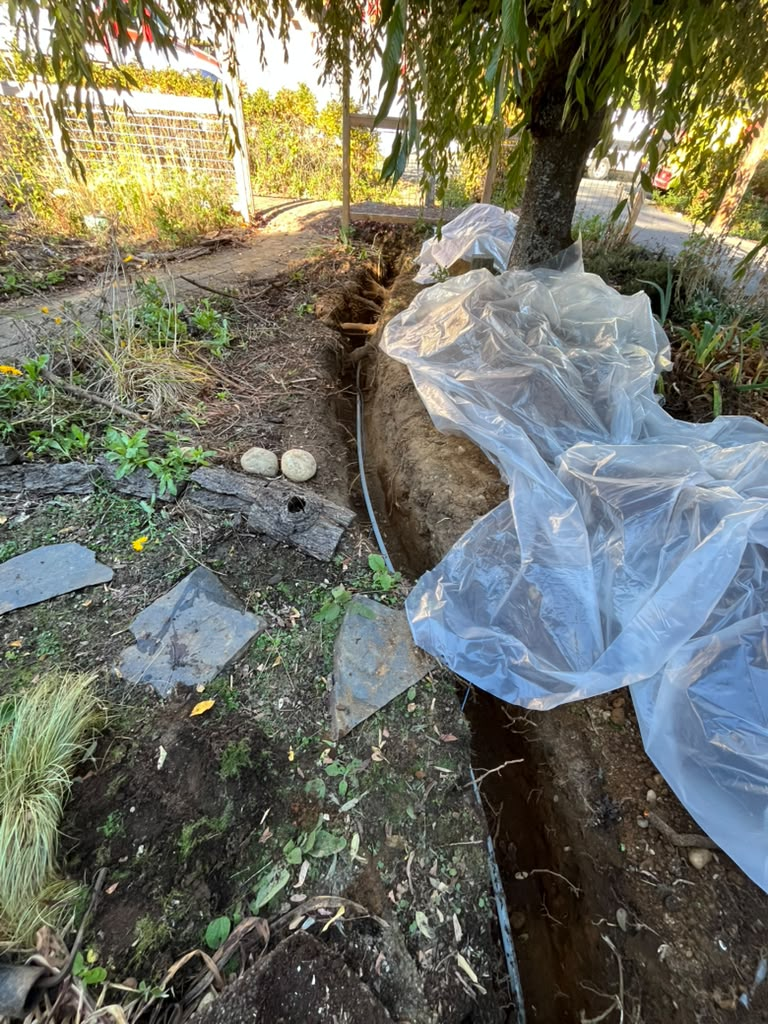
Start With the Symptoms
The first step is determining what the property is actually experiencing.
Where is water appearing? Has pressure changed? Is water usage unexpectedly high? Does the problem appear constant or intermittent?
These details can help narrow the investigation before deciding how invasive a repair needs to be.
Identify the Likely Location
Once an underground water line is suspected, the next objective is determining where the problem is likely occurring and what portion of the system may be affected.
The appropriate approach depends on the property, pipe location, accessibility, existing materials, and the nature of the suspected failure.
The goal is not simply to dig until a pipe is found. A diagnosis-first approach helps determine whether a targeted repair makes sense or whether broader deterioration makes replacement worth considering.
Our Water Line Repair and Replacement Process
Every property is different, but a typical water-line project follows a straightforward process.
1. Evaluate the Problem
We start with the symptoms and available information to determine whether the issue appears related to the buried water service line.
2. Determine the Likely Location and Scope
The next step is narrowing down where the problem is occurring and whether it appears isolated or potentially part of a larger issue.
3. Review Access Conditions
Landscaping, driveways, retaining features, utilities, structures, depth, and the route between the utility connection and building can all affect how a water line is accessed.
4. Compare Repair and Replacement Options
A localized failure may justify repairing a particular section. A line with widespread deterioration or repeated problems may make replacement a more practical option.
5. Complete the Appropriate Work
Once the scope has been established, the affected section can be accessed, repaired, or replaced according to the conditions of the property.
6. Restore the Work Area
Restoration requirements depend on where access was necessary and what surfaces or landscaping were disturbed during the project.
When a Localized Repair May Make Sense
Repair may be appropriate when:
- The failure appears confined to one area
- Most of the existing pipe remains serviceable
- The damaged section is reasonably accessible
- Previous repairs are not becoming a recurring pattern
- There is no evidence suggesting broader deterioration
A targeted repair can address the immediate failure without replacing an otherwise functional line.
When Replacement May Be Worth Considering
Replacement may be recommended when:
- Problems are occurring in multiple sections
- The line has experienced repeated leaks
- Existing material has deteriorated substantially
- The route or condition of the line makes continued spot repairs impractical
- A larger project would address the underlying condition more effectively
Replacement should not automatically be assumed simply because a leak exists. The condition of the line and the economics of continued repairs should be considered together.
What Causes Buried Water Lines to Fail?
Underground pipes operate in an environment that homeowners rarely see. Over time, several factors can contribute to failure.
Aging or Deteriorating Pipe Materials
Pipe materials can deteriorate as they age. The type of material, installation quality, soil conditions, and previous repairs can all influence how a line performs over time.
Ground Movement
Soil can settle or shift, placing stress on buried piping and connections.
Corrosion
Certain pipe materials can deteriorate through corrosion, eventually leading to restricted flow, weak areas, or leaks.
Previous Repairs or Connections
A water line that has been repaired previously can contain transitions, fittings, or older sections that behave differently from the rest of the system.
Accidental Damage
Excavation, landscaping, construction, or other underground work can damage a buried water line.
Installation Conditions
Pipe depth, bedding, routing, connections, and other installation conditions can influence long-term performance.
The underlying cause matters because repairing the visible failure without considering the rest of the line can sometimes lead to another problem later.
Excavation and Access for Water Line Work
Traditional Excavation
Some water-line repairs require direct access to the damaged pipe.
Excavation may be appropriate when a particular section needs to be exposed, when connections must be accessed, or when property conditions make direct excavation the most practical approach.
Limited-Dig or Alternative Replacement Approaches
Depending on the line, route, material, access, and surrounding utilities, some projects may have options that reduce the amount of open excavation required.
However, no single method is appropriate for every Bothell property.
Before promising a particular replacement technique, the existing line and site conditions should be evaluated.
Water Line Problems on Bothell Properties
Bothell contains a mix of established neighborhoods, newer development, residential properties, commercial areas, landscaped lots, driveways, slopes, and properties with substantial underground infrastructure.
Those differences matter when planning water-line work.
A service line may cross a lawn on one property and run beneath landscaping, pavement, or other improvements on another. Access can also be affected by existing utilities and the location of the water meter or service connection.
Western Washington's long wet season can make one symptom particularly difficult to interpret: unexplained water in the yard.
A soggy area does not necessarily mean a water service line is leaking. Surface drainage, groundwater, roof runoff, foundation drainage, and saturated soil can produce similar conditions.
If the source of the water is uncertain, determining what system is actually responsible should come before committing to underground repair work.
Private Water Lines, Utilities, and Permits
Determining Responsibility
An underground pipe problem does not automatically mean the property owner is responsible for every section involved.
The boundary between privately maintained service piping and utility-maintained infrastructure depends on the system serving the property and where the problem is located.
If a suspected failure appears close to the meter, public connection, or water main, responsibility should be confirmed before major work begins.
Permits and Utility Coordination
Water-line replacement may involve permitting, utility locating, inspection, or coordination requirements depending on the scope and location of the project.
Requirements can vary based on the jurisdiction and utility serving a particular Bothell address.
What Does Water Line Repair or Replacement Cost in Bothell?
There is no reliable single price for underground water-line work without evaluating the property.
Cost can be influenced by:
- Length of pipe involved
- Depth of the existing line
- Pipe material
- Location of the failure
- Accessibility
- Soil and ground conditions
- Landscaping
- Driveways or other hard surfaces
- Nearby utilities
- Required excavation
- Whether a section is repaired or the entire line is replaced
- Restoration requirements
- Permit or inspection requirements when applicable
A short, accessible repair is a very different project from replacing a long service line beneath developed areas of a property.
The better question is not simply, "How much does a water line cost?"
It is, "What actually needs to be repaired, and what is the most appropriate way to do it?"
Why Call Dirt Cheap Sewer for an Underground Water Line Problem?
Underground Problems Require Underground Experience
Water service lines share many of the same challenges as other buried utility systems: locating the problem, understanding soil and access conditions, working around existing infrastructure, and determining how much excavation is actually necessary.
Dirt Cheap Sewer focuses on underground sewer, drain, water, excavation, and related exterior plumbing work.
We Start With the Problem, Not a Predetermined Solution
Not every leak requires complete replacement.
Not every older line should receive another spot repair.
The right answer depends on what is happening below the surface. Our objective is to help determine the scope of the problem and then discuss the repair or replacement approach that fits those conditions.
Residential and Commercial Water Line Services
Residential Water Lines
A damaged residential service line can affect water pressure, water usage, landscaping, and the ability to reliably supply the home.
We help homeowners investigate suspected underground problems and understand available repair or replacement options.
Commercial and Multi-Use Properties
Commercial properties can involve longer pipe runs, more developed surfaces, different access conditions, and additional coordination.
The first objective remains the same: determine where the problem is occurring and establish the scope before deciding how it should be repaired.
Frequently Asked Questions About Water Lines and Water Mains in Bothell
Possible signs include unexplained water use, reduced water pressure, wet areas in the yard, or a meter that continues showing usage when fixtures are off. These symptoms can have other causes, so the source should be investigated before assuming the buried water line has failed.
Responsibility depends on where the problem is located and the utility serving the property. Property owners are commonly responsible for at least part of the service line supplying their property, but the exact boundary should be confirmed with the appropriate utility before work begins.
Yes, in some situations. If damage is localized and the remainder of the line is in suitable condition, a targeted repair may make sense. Replacement may become more practical when deterioration is widespread or leaks are recurring.
Not necessarily. Drainage problems, groundwater, irrigation, roof runoff, saturated soil, and other conditions can also create wet areas. Identifying the source of the water is important before excavating.
Not always. The amount of excavation depends on the existing line, its route, access, surrounding utilities, and the replacement method appropriate for the property. Some projects require open excavation while others may allow a more limited approach.
Pricing depends on factors such as line length, depth, accessibility, existing pipe material, excavation requirements, utilities, surface restoration, and the scope of replacement. An evaluation is necessary before providing a meaningful project quote.
That depends on the condition of the complete line. One isolated failure may justify repair. Repeated leaks, substantial deterioration, or multiple weak sections can make replacement worth considering. The line should be evaluated before deciding.
Find Out What's Happening Below the Surface
Low pressure, unexplained water use, or water appearing in the yard can indicate an underground water-line problem—but the symptoms do not tell you the entire story.
Dirt Cheap Sewer can help evaluate the problem, determine the likely scope, and explain whether repair or replacement makes sense for your Bothell property.