

Water should move away from your home, foundation, walkways, and other important areas of your property—not collect beside them.
Dirt Cheap Sewer provides outdoor and foundation drainage services in Bothell for homeowners and property managers dealing with standing water, saturated soil, poor runoff, foundation drainage concerns, and other exterior water problems.
The right solution depends on where the water is coming from, where it is collecting, how the property is graded, and where that water can safely be directed. Instead of assuming every wet yard needs the same type of drain, our approach begins with evaluating the actual drainage conditions.
Outdoor Drainage Is About Controlling Where Water Goes
Rain is unavoidable in Western Washington. Drainage problems are not.
A properly functioning exterior drainage system helps collect, redirect, or disperse water before it becomes a persistent problem around your property.
Poor drainage can contribute to issues such as:
- Standing water in lawns or landscaped areas
- Water collecting near the foundation
- Saturated or muddy soil
- Water flowing toward the home instead of away from it
- Erosion around slopes, walkways, or planting beds
- Downspouts overwhelming small areas of the yard
- Water entering crawl spaces or low areas
- Recurring puddles after ordinary rainfall
- Soft or unstable areas around exterior structures
The goal is not simply to make water disappear. A drainage system needs to move water to an appropriate discharge or dispersal point without creating another problem elsewhere on the property.
When Should You Have Your Drainage Evaluated?
One wet patch after an unusually heavy storm does not automatically mean your property needs a new drainage system.
Repeated patterns are more important.
Consider having your outdoor drainage evaluated if you regularly notice:
Standing Water
Puddles that remain long after rainfall may indicate that water has no effective path away from the area.
Water Near the Foundation
Water repeatedly collecting beside the foundation deserves attention because prolonged saturation can create moisture problems around the structure.
A Constantly Muddy Yard
If certain parts of the yard remain soft or muddy while surrounding areas dry normally, surface grading or subsurface drainage may be contributing to the problem.
Water Flowing Toward the House
The grade around a property should generally encourage water to move away from structures. Settlement, landscaping changes, or altered drainage paths can sometimes send runoff in the wrong direction.
Overflowing Drainage Areas
A drain that once worked but now backs up, overflows, or drains slowly may have become clogged, damaged, or overwhelmed.
Soil Erosion
Visible channels, displaced soil, exposed roots, or washed-out landscaping can indicate that runoff is moving too aggressively through one area.
Crawl Space or Basement Moisture
Exterior drainage is not the only possible cause of moisture below a home, but conditions outside the structure should be evaluated when water intrusion appears after rainfall.
We Look for the Source Before Recommending the Solution

Exterior drainage is rarely a one-size-fits-all service.
Water collecting in one part of a Bothell property could be caused by several different conditions, including:
- Poor surface grading
- Concentrated roof runoff
- Downspout discharge
- Compacted soil
- Failed or clogged drain lines
- Damaged exterior drainage piping
- Low spots in landscaping
- Runoff from uphill portions of the property
- Inadequate drainage around hardscaped areas
- Changes made during previous landscaping or construction
That is why diagnosis matters.
A drainage contractor should understand how the water reaches the problem area and where it can realistically go before recommending excavation or installing new piping.
Our evaluation may consider the visible drainage pattern, existing drainage infrastructure, property slope, soil conditions, runoff sources, and accessible discharge points.
How We Approach Drainage Problems
1. Identify the Problem Area
We begin with the locations where water is collecting, overflowing, eroding soil, or causing concern around the property.
2. Evaluate Where the Water Comes From
The source may be rainfall, roof runoff, an existing drain, surface grading, groundwater conditions, or water traveling from another area of the property.
3. Review Existing Drainage
If the property already has drains, catch basins, buried piping, or other drainage infrastructure, those components may need to be inspected before adding anything new.
4. Determine Where Water Can Go
Moving water away from one location only works when there is an appropriate place for that water to discharge or disperse.
5. Recommend the Appropriate Scope
Depending on what we find, the solution could involve cleaning or repairing an existing drainage component, improving collection, adding drainage infrastructure, replacing damaged piping, or correcting another issue contributing to the water problem.
6. Complete the Drainage Work
When excavation or installation is required, the work is planned around the property conditions and the specific drainage objective.
7. Confirm the Drainage Path
The finished system should provide a logical path for water from the collection area toward its intended outlet or dispersal point.
What Kind of Drainage System Does Your Property Need?
The answer depends on the property.
Possible outdoor drainage components can include:
French Drains
French drains are commonly used to collect subsurface water and redirect it through perforated drainage piping surrounded by appropriate drainage material.
They can be useful in certain consistently wet areas, but they are not automatically the correct solution for every drainage problem.
Catch Basins
Catch basins collect surface water at strategic low points and route it into connected drainage piping.
They may be appropriate where runoff naturally concentrates.
Solid Drainage Pipe
Solid piping can be used to carry collected water from one location to another without intentionally allowing water into or out of the pipe along the route.
Downspout Drainage
Roof runoff can create significant concentrations of water around a home.
Properly designed downspout drainage can help carry that water farther from vulnerable areas instead of allowing it to discharge beside the foundation.
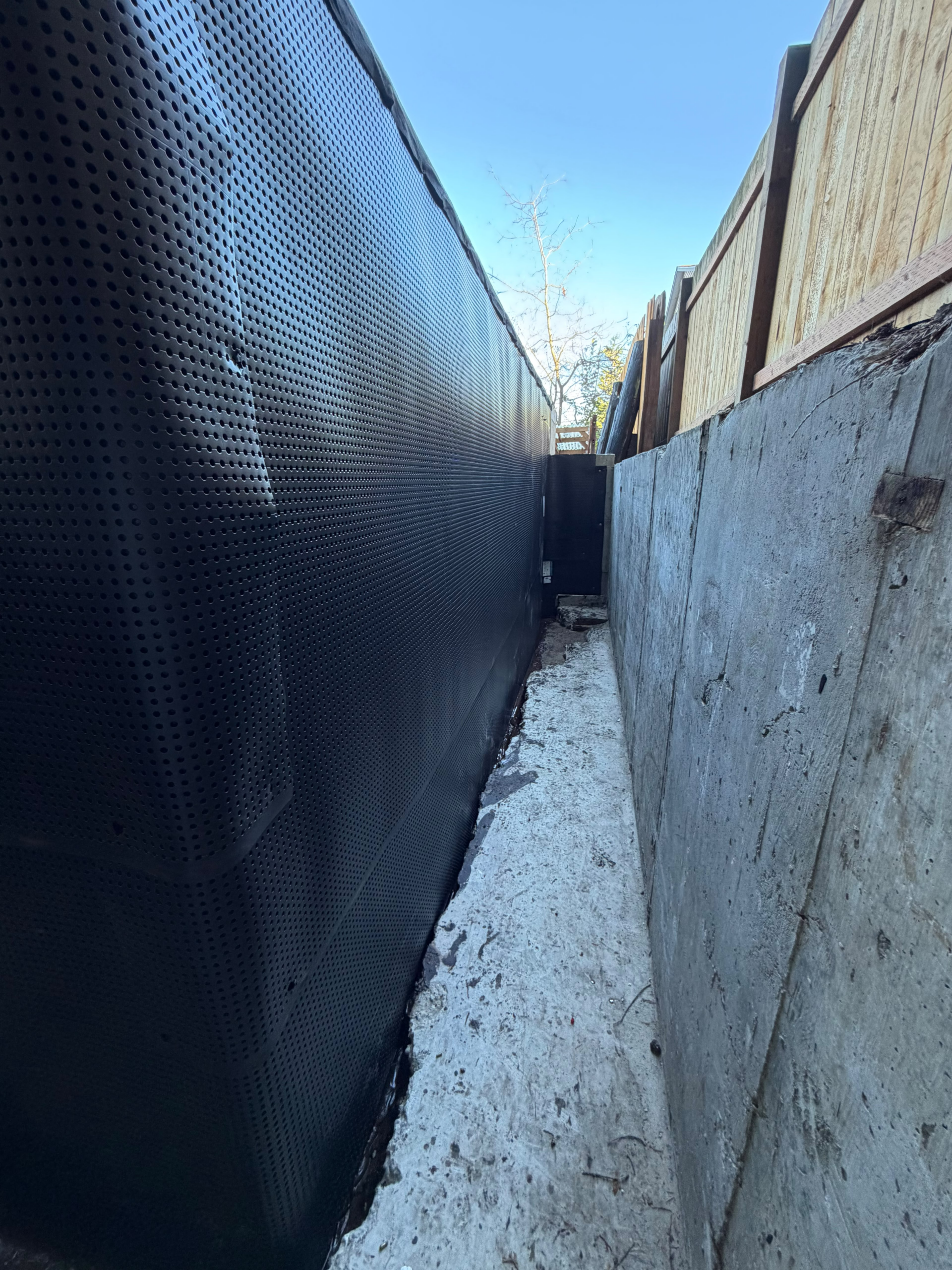
Foundation Drainage
Drainage near the foundation may involve existing perimeter drainage systems or other exterior measures intended to control water around the structure.
Determining the appropriate approach requires understanding whether the problem is surface water, subsurface water, an existing failed system, or another condition.
Surface Drainage Improvements
Sometimes the primary issue is how water travels across the surface of the property. Collection points or other drainage improvements may be considered depending on the grade and surrounding conditions.
Water Around the Foundation Should Not Be Ignored
A foundation does not have to be visibly flooded for exterior drainage to deserve attention.
Persistent saturation around the structure can contribute to moisture conditions around crawl spaces, basements, retaining structures, and other below-grade areas.
The first question should be:
Why is water accumulating there?
Possible contributors include roof runoff, poor grading, blocked drainage, damaged drainage piping, or water traveling toward the home from another portion of the property.
Foundation drainage work should therefore begin with determining whether the existing drainage system is functioning and whether surface water is being controlled appropriately.
Installing another drain without understanding the underlying water path can create unnecessary work without solving the original problem.
You May Not Need an Entirely New Drainage System
Existing drainage infrastructure should be considered before automatically replacing or expanding it.
A drainage problem may sometimes come from:
- A clogged drainage line
- Sediment buildup
- Root intrusion
- Crushed or separated piping
- A damaged catch basin
- Improper connections
- An outlet that no longer functions correctly
- Landscaping changes that altered the original drainage pattern
If the existing system can be restored or repaired effectively, that may be more appropriate than installing a completely separate drainage network.
When the existing drainage layout is inadequate for the property conditions, larger improvements may be necessary.
The evaluation determines which situation you are dealing with.
Why Drainage Problems Are Common Around Bothell Properties
Bothell properties vary significantly.
Some neighborhoods have relatively level lots, while others include slopes, retaining walls, mature landscaping, wooded areas, or substantial elevation changes between neighboring properties.
Western Washington rainfall also means drainage systems may need to manage frequent periods of saturated soil rather than only occasional major storms.
Several property conditions can influence drainage performance:
- Lot slope
- Soil composition
- Mature trees and roots
- Older buried drainage infrastructure
- Landscaping modifications
- Retaining walls
- Driveways and other impermeable surfaces
- Roof size and downspout placement
- Neighboring elevations
- Natural low points
- Previous additions or construction
These variables are why two homes on the same Bothell street can experience completely different drainage conditions.
A useful drainage plan needs to be based on the property itself rather than a generic installation formula.
Outdoor Drainage Costs Depend on the Scope of the Problem
There is no meaningful universal price for exterior drainage work because properties and drainage problems differ substantially.
Factors that can affect the project scope include:
- Type of drainage problem
- Size of the affected area
- Required excavation depth
- Total drainage-line length
- Soil and ground conditions
- Existing landscaping or hardscaping
- Accessibility for excavation equipment
- Number of collection points
- Existing drainage infrastructure
- Pipe condition
- Drainage materials required
- Restoration needs
- Available discharge or dispersal options
A smaller repair to an existing drainage line is very different from installing a larger drainage system across multiple portions of a property.
The most reliable way to determine what your property actually requires is to evaluate the drainage problem first.
Practical Drainage Solutions Start With Understanding the Problem
Outdoor drainage can involve much more than placing a pipe in the ground.
The drainage system may interact with grading, sewer or utility lines, landscaping, foundations, driveways, retaining walls, and other parts of the property.
Dirt Cheap Sewer approaches drainage problems from an underground infrastructure perspective.
That means the focus is on:
- Identifying where the water originates
- Understanding existing underground drainage
- Determining whether a line is clogged or damaged
- Evaluating whether repair or replacement makes sense
- Planning excavation when it is actually necessary
- Establishing a practical route for collected water
- Avoiding assumptions about the required solution
The objective is not to recommend the largest project.
It is to identify what is preventing water from draining correctly and determine an appropriate way to address it.
Drainage Help for Different Types of Bothell Properties
Drainage problems can affect both residential and commercial properties.
Residential Properties
Home drainage concerns frequently involve yards, foundations, crawl spaces, downspouts, patios, driveways, retaining walls, and landscaped areas.
The drainage strategy should take the layout and existing infrastructure of the property into account.
Commercial Properties
Commercial drainage systems may need to manage runoff from larger roofs, parking areas, landscaped sections, access roads, or other developed surfaces.
When drainage problems occur, identifying the affected system and understanding how water travels across the site is an important first step.
Regardless of property type, the solution begins with evaluating the actual water problem rather than assuming which drainage product should be installed.
Outdoor & Foundation Drainage FAQs
Standing water can result from poor grading, compacted soil, natural low spots, roof runoff, clogged drainage lines, damaged drainage systems, or water flowing into the area from another part of the property. An evaluation helps determine which condition is responsible.
No. French drains are useful for certain subsurface drainage problems, but they are not the correct answer to every wet-yard problem. Surface runoff, downspouts, damaged piping, grading, or other conditions may need to be addressed instead.
Yes. The first step is determining why water is reaching or remaining near the foundation. The appropriate solution depends on whether the issue involves surface drainage, roof runoff, existing foundation drainage, damaged piping, grading, or another source.
In many cases, existing drainage systems can be evaluated for clogs, damage, deterioration, or other problems before a new system is considered. Whether repair is practical depends on the condition and layout of the drainage system.
Water may be collecting in a low area, draining slowly through compacted soil, entering from an uphill area, or encountering an inadequate or blocked drainage system. Persistent saturation is usually more informative than temporary puddling immediately after heavy rain.
Exterior water can contribute to moisture around or beneath a home, although crawl-space moisture can have multiple causes. Exterior drainage conditions should be considered when moisture appears or worsens during wet weather.
Downspout drainage may be one component of an exterior drainage solution. The appropriate configuration depends on where the water can safely be routed and the conditions around the property.
That depends on the property layout, existing infrastructure, grade, applicable requirements, and available drainage locations. A drainage system should not simply move water from one problem area into another.
No. The required work depends on the cause of the drainage problem. Existing systems may sometimes require cleaning or localized repair, while installations and buried pipe replacements generally require some excavation.
Cost depends on the drainage problem, excavation requirements, system length, access, materials, existing infrastructure, and restoration needs. An evaluation is necessary before the scope can be estimated responsibly.
Stop Guessing Where the Water Is Coming From
If standing water, saturated soil, foundation moisture, or poor runoff keeps returning around your Bothell property, the first step is figuring out why the water is collecting there.
Dirt Cheap Sewer can evaluate the drainage conditions, review existing outdoor drainage where applicable, and help determine an appropriate next step.