

A leaking or damaged underground water line can lead to rising water bills, soggy areas in the yard, reduced water pressure, or unexpected water around the property. Dirt Cheap Sewer helps Auburn property owners identify problems affecting exterior water lines and determine whether repair, replacement, or additional investigation is the appropriate next step.
From the service line supplying a home to larger underground water piping around a property, the first priority is finding the source of the problem.
Signs You May Have an Underground Water Line Problem
Water line problems are not always obvious. Some failures produce visible water immediately, while others develop underground for weeks or months before the symptoms become noticeable.
Common warning signs can include:
- Unexplained increases in water usage or water bills
- Reduced water pressure throughout the home
- Water pressure that changes suddenly
- Wet or unusually soft areas in the yard
- Standing water when it has not recently rained
- Water surfacing near a driveway, sidewalk, or landscaping
- Unusual sounds when no fixtures are operating
- Discolored water or sediment
- Repeated leaks in an older exterior water line
- Water appearing near the foundation
- A water meter that continues registering usage when fixtures are off
Some of these symptoms can also be caused by plumbing problems inside the building. Proper diagnosis helps determine whether the issue is actually located in the underground service line.
Water Service Lines vs. Public Water Mains
The phrase water main is often used broadly, but not every underground water pipe has the same ownership or responsibility.
A residential property commonly has a smaller water service line connecting the building to the public water system. The public water main typically runs beneath or alongside a street or public right-of-way.
Exactly where private responsibility begins and ends can depend on the utility provider, meter location, property configuration, and local requirements.
Dirt Cheap Sewer can evaluate underground piping located on or serving the property and help determine the next appropriate step.
If the suspected problem involves municipal infrastructure rather than a private service line, the applicable water utility may need to be contacted.
Finding the Source of a Water Line Leak
Digging should not be the first response to every suspected water line problem.
An evaluation begins by looking at the symptoms and gathering information about where water may be escaping. The goal is to narrow down the likely source before deciding how much access is actually required.
Depending on the situation, the diagnostic process may include:
- Reviewing visible leak symptoms
- Checking the suspected water line route
- Evaluating pressure-related complaints
- Looking for saturated soil or surface water
- Reviewing previous repairs or known pipe locations
- Determining whether the problem is isolated or recurring
- Identifying accessible connection points
- Coordinating additional leak-location methods when appropriate
A targeted diagnosis helps avoid unnecessary excavation and provides better information for deciding between repair and replacement.

Water Line Repair vs. Water Line Replacement
Not every leaking water line needs to be replaced from end to end.
Water Line Repair
A localized repair may make sense when the damage is isolated and the remaining pipe appears to be in serviceable condition.
Possible repair situations include:
- One damaged section of pipe
- A failed fitting or connection
- Accidental damage
- A clearly identified isolated leak
- A relatively newer line with a single problem area
Repair can restore the affected section without replacing an otherwise usable water service line.
Water Line Replacement
Replacement may make more sense when the existing line has broader problems or when repeated repairs are becoming unreliable.
Replacement may be considered when:
- The line has multiple leaks
- The existing pipe is severely deteriorated
- Previous repairs have repeatedly failed
- Corrosion or material failure affects a larger section
- The line is undersized for the property's needs
- Damage extends across a substantial portion of the route
- The existing installation creates ongoing access or reliability problems
The best choice depends on the pipe condition, location of the failure, accessibility, material, and expected long-term performance.
What Causes Underground Water Lines to Fail?
Underground water pipes operate under constant pressure and can be affected by both age and surrounding soil conditions.
Common causes of water line damage include:
Aging Pipe Materials
Pipe materials can deteriorate over time. Corrosion, weakened joints, and general material degradation can eventually produce leaks.
Ground Movement
Soil can shift, settle, or move around an underground pipe. That movement may place stress on fittings and sections of the water line.
Root Activity
Tree and shrub roots can affect the soil surrounding a water line and may contribute to displacement or damage.
Freezing Conditions
Although underground lines are typically installed below appropriate depths, unusually cold conditions or improperly protected piping can contribute to freezing and pipe failure.
Improper Installation
Poor bedding, inadequate connections, unsuitable materials, or installation problems can shorten the life of an underground water line.
Accidental Damage
Excavation, landscaping, fence installations, construction, or other digging around a property can strike an existing water line.
Understanding why a line failed can be important when deciding how it should be repaired or replaced.
Excavation and Access for Water Line Work
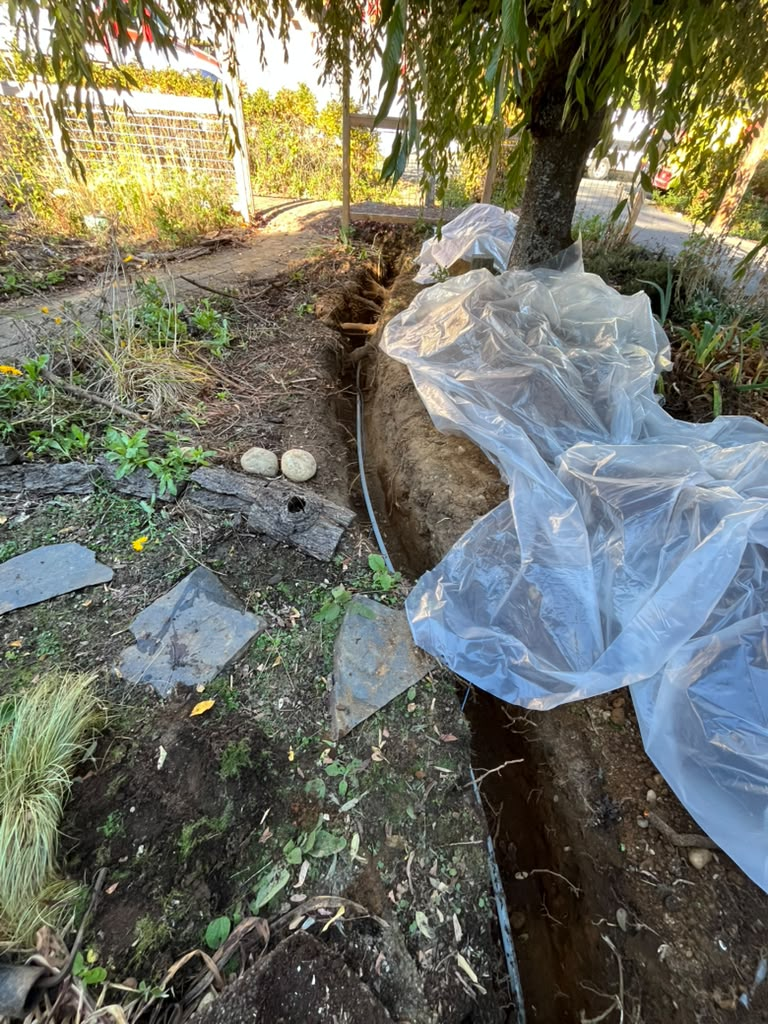
Because water service lines are buried, some projects require excavation to reach the damaged piping.
The amount of digging depends heavily on where the problem is located and how the existing line is routed.
Access considerations may include:
- Lawn and landscaped areas
- Driveways
- Walkways
- Patios
- Retaining walls
- Fences
- Trees and mature landscaping
- Utility crossings
- Depth of the existing line
- Location of the meter or connection point
- Distance between the water source and the building
A good water line plan considers both the plumbing repair and the surrounding property.
When practical, identifying the likely failure point before excavation can reduce unnecessary disruption.
Water Line Problems Near Foundations
Water surfacing near a foundation should be investigated carefully.
The source may be a pressurized water line, but it could also involve:
- Roof runoff
- Downspout discharge
- Foundation drainage
- Groundwater
- Irrigation piping
- Sewer or drainage piping
- Plumbing originating inside the building
A leaking water service line can continuously introduce water into surrounding soil because the line remains under pressure.
That makes accurate identification especially important.
If the water is actually coming from a drainage or foundation-water problem rather than a water supply line, Dirt Cheap Sewer can help determine whether another exterior underground system should be evaluated.
Water Line Service for Auburn Properties
Auburn includes a wide variety of residential neighborhoods and property configurations, so underground water line projects can differ significantly from one property to another.
Line length, landscaping, slopes, driveways, utility locations, and the position of the home relative to the street can all affect how a water line is accessed and repaired.
Instead of assuming every Auburn water line problem requires the same solution, Dirt Cheap Sewer evaluates the specific conditions affecting the property.
That means considering:
- Where the symptoms are appearing
- Where the water meter or supply connection is located
- The likely route of the existing line
- Accessibility for excavation
- Existing landscaping and hardscape
- Known pipe materials
- Previous water line repairs
- Whether the failure appears isolated or widespread
Our Water Line Service Process
1. Review the Problem
The process begins with the symptoms you have noticed, including leaks, pressure changes, wet ground, unusual water usage, or previous plumbing findings.
2. Evaluate the Likely Water Line
The suspected route and accessible portions of the line are assessed to determine where the issue may be located.
3. Determine the Appropriate Diagnostic Step
Additional investigation may be needed before excavation, particularly when the exact location of the leak is uncertain.
4. Develop a Repair or Replacement Plan
Once enough information is available, the next step can be based on the actual pipe condition and property layout rather than guesswork.
5. Access the Underground Line
Excavation or another appropriate access method is used when necessary to reach the damaged piping.
6. Repair or Replace the Water Line
The affected pipe is addressed according to the agreed scope of work.
7. Restore the Work Area
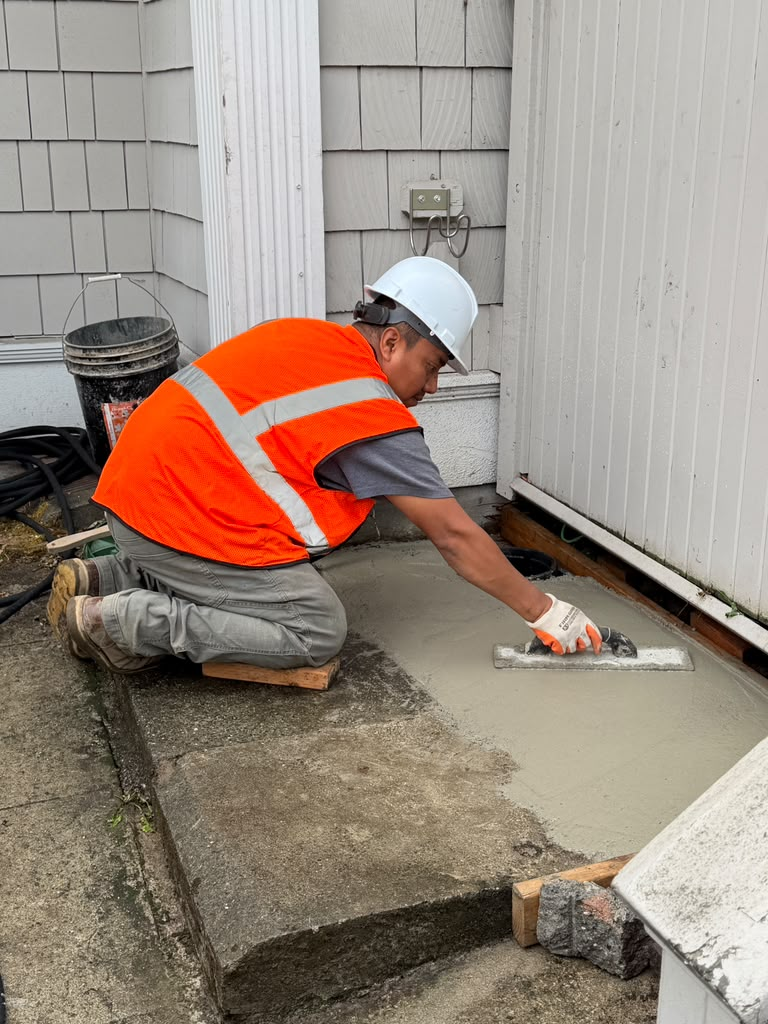
Excavated areas are addressed according to the project scope and site conditions.
What Affects the Cost of Water Line Repair or Replacement?
There is no single price that applies to every underground water line project.
The cost can depend on factors such as:
- Location of the leak
- Depth of the water line
- Length of pipe requiring replacement
- Pipe material
- Number of fittings or connections
- Ease of excavation
- Driveways or concrete surfaces
- Landscaping
- Retaining walls
- Utility crossings
- Accessibility for equipment
- Whether the leak location is already known
- Permit or inspection requirements when applicable
- Amount of restoration required afterward
A short, accessible repair in an open yard is a very different project from replacing a long service line beneath developed portions of a property.
An evaluation provides the information needed to determine the appropriate scope.
When Is a Water Line Problem an Urgent Issue?
A suspected pressurized water line leak deserves prompt attention because water may continue escaping even when nobody is actively using plumbing fixtures.
Contact a professional promptly if you notice:
- Rapidly accumulating water
- A significant drop in household water pressure
- Water flowing continuously across the property
- Sudden unexplained water usage
- Water approaching the foundation or other structures
- A known broken underground pipe
- Major changes in the condition of the yard
If substantial water is actively escaping and you know how to safely operate the appropriate shutoff, shutting off the affected supply may help limit additional water loss until the problem can be evaluated.
Do not enter unsafe excavations or attempt to expose buried utilities yourself.
Why Work With Dirt Cheap Sewer for Auburn Water Line Problems?
Underground water lines are different from many ordinary indoor plumbing repairs. Reaching the pipe often requires understanding excavation, underground utilities, property access, and the surrounding exterior systems.
Dirt Cheap Sewer focuses on underground and exterior infrastructure, allowing the problem to be approached from both a plumbing and excavation perspective.
The goal is to:
- Identify the likely source before unnecessary digging
- Understand the condition of the existing line
- Determine whether repair or replacement makes sense
- Consider access and excavation requirements
- Explain available options clearly
- Address the underground problem with the surrounding property in mind
For Auburn homeowners dealing with a suspected underground water leak, that diagnostic-first approach can help turn vague symptoms into a practical repair plan.
Frequently Asked Questions About Water Lines & Water Mains in Auburn
Common signs include an unexplained increase in water usage, lower water pressure, soggy areas in the yard, standing water, or water surfacing near landscaping, sidewalks, or the foundation. Because these symptoms can have other causes, the source should be properly evaluated before repairs begin.
Responsibility depends on where the damaged pipe is located and which portion belongs to the property owner versus the water utility. A private water service line typically connects the property to the public system, while the municipal water main serves multiple properties. The applicable utility should be contacted when the suspected failure is within public infrastructure.
Yes. If the damage is confined to one section and the rest of the line remains in acceptable condition, a localized repair may be appropriate. Repeated leaks or widespread deterioration may make replacement the better long-term option.
A leaking underground water line is one possible cause, especially when the wet area persists during dry weather. Irrigation leaks, drainage problems, groundwater, sewer issues, and other underground systems can produce similar symptoms.
Yes. A significant leak between the water source and the building can reduce the amount of pressure or flow reaching plumbing fixtures. Low pressure can also have other causes, so the complete system should be considered before assuming the underground line is responsible.
Service life varies significantly depending on the pipe material, installation quality, soil conditions, water chemistry, movement around the pipe, and other factors. The age of a pipe can be useful information, but condition is more important when deciding whether repair or replacement makes sense.
Not necessarily. The amount of excavation depends on the route of the pipe, the location of the problem, available access, and the repair method selected. Locating the problem before excavation can help limit unnecessary digging.
Roots can contribute to movement and pressure around underground piping, especially when growing near an existing line. The exact cause of a failure should still be verified because root activity is only one of several possibilities.
That decision depends on the extent of the damage, pipe material, repair history, accessibility, and condition of the remaining line. A single isolated problem may justify repair, while repeated failures or widespread deterioration may favor replacement.
For suspected problems involving the private underground water service line serving your property, Dirt Cheap Sewer can evaluate the exterior piping and help determine the appropriate next step. If the problem appears to involve the public water system, the local water utility may also need to be contacted.
Request Water Line Service in Auburn, WA
If you are seeing unexplained water, experiencing reduced pressure, dealing with a known underground leak, or trying to determine whether an aging water service line needs replacement, Dirt Cheap Sewer can help evaluate the problem.
Tell us what you have noticed, where the symptoms are occurring, and whether any previous leak detection or plumbing work has already been performed. From there, the next diagnostic or repair step can be determined based on the actual conditions at your property.