

Standing water, soggy soil, runoff, and moisture collecting near a foundation can point to an outdoor drainage problem that should be investigated before it causes additional damage. Dirt Cheap Sewer provides outdoor and foundation drainage services in Auburn to help property owners identify where water is coming from, how it is moving across the property, and what drainage improvements may be appropriate.
Whether the problem appears after heavy rain or has gradually become more noticeable over time, the first step is understanding the cause rather than assuming a particular drainage system will solve it.
Signs Your Auburn Property May Have a Drainage Problem
Outdoor drainage problems do not always begin with obvious flooding. Sometimes the first signs are patches of soil that never seem to dry, water collecting beside a driveway, or recurring moisture near the foundation.
Problems worth investigating can include:
- Standing water in the yard after rainfall
- Saturated or muddy areas that remain wet
- Water collecting near the foundation
- Runoff flowing toward the house instead of away from it
- Erosion around landscaping or slopes
- Overflowing or overwhelmed drainage areas
- Water pooling around patios, walkways, or driveways
- Existing drains that appear slow or ineffective
- Moisture entering crawlspaces or lower portions of the property
- Recurring drainage problems despite previous repairs
The location and timing of the water can provide important clues. A low spot that collects surface runoff may require a different solution than water coming from a damaged underground drainage line.
That is why drainage work should begin with an evaluation of the property and the symptoms you are experiencing.
What Outdoor Drainage Services Can Address
Outdoor drainage systems are designed to move unwanted water away from areas where it can create problems.
Depending on the property and the source of the water, drainage improvements may involve systems or repairs intended to manage:
Yard and Surface Water
Low areas, landscape grading, and concentrated runoff can create persistent pooling or saturated ground.
Drainage improvements may help intercept or redirect that water before it reaches vulnerable parts of the property.
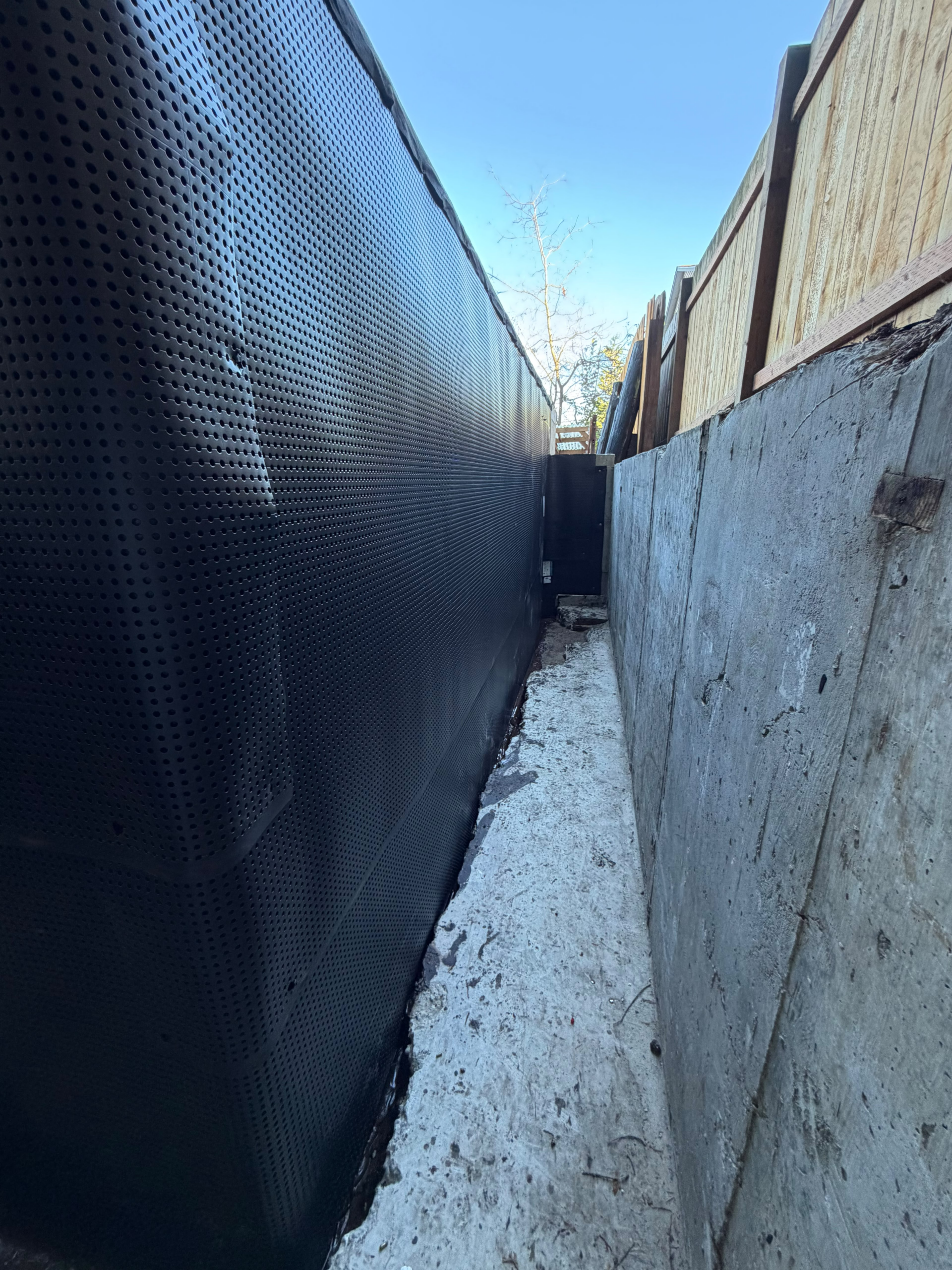
Foundation Drainage
Water repeatedly collecting near the foundation can increase moisture exposure and contribute to problems around basements, crawlspaces, and foundation walls.
An evaluation can help determine whether an existing foundation drainage system is functioning properly or whether another drainage strategy is needed.
Downspout and Roof Runoff
Roof drainage can send a substantial amount of water toward the ground during periods of rain. If downspouts discharge in the wrong location or underground connections are damaged or clogged, water may collect near the structure.
Driveways, Walkways, and Hardscapes
Concrete and paved areas can concentrate runoff because water cannot absorb into the ground as easily.
Drainage may be needed to intercept water before it flows toward the building or collects in low areas.
Finding the Cause Before Choosing a Drainage Solution

There is no single drainage system that is correct for every property.
Installing a French drain because the yard is wet, for example, may not solve the problem if the real cause is a damaged underground pipe, poor surface grading, or improperly directed roof runoff.
A drainage evaluation may consider factors such as:
- Where water first appears
- How long water remains after rain
- Property slope and grading
- Soil saturation
- Existing drains and drainage piping
- Downspout discharge locations
- Low points around the property
- Nearby retaining walls or hardscapes
- Signs of erosion
- Moisture around the foundation
When underground piping may be involved, additional inspection may also be appropriate.
The goal is to identify the source and movement of the water before deciding how to correct it.
Outdoor Drainage Solutions for Auburn Properties
Once the drainage problem is better understood, the appropriate solution depends on the property.
Potential drainage work may include:
French Drains
French drains can collect water moving through saturated soil and redirect it toward a suitable discharge point.
They can be useful in certain yard and foundation drainage situations, but proper placement, slope, and discharge planning are important.
Catch Basins and Surface Drains
Surface drains can collect runoff in areas where water tends to pool.
These systems are commonly used around yards, driveways, patios, and other locations where surface water becomes concentrated.
Foundation Drainage Improvements
Existing perimeter or foundation drainage systems may become clogged, damaged, disconnected, or otherwise ineffective.
Repair or modification may help improve how water is carried away from the structure.
Drainage Pipe Repair or Replacement
If an underground drainage line has collapsed, separated, become clogged, or deteriorated, correcting the pipe itself may be necessary.
Runoff Redirection
Sometimes the solution involves changing where water is discharged rather than installing an entirely new drainage system.
The correct approach should be based on what is happening at the specific property rather than selecting a drainage method in advance.
Drainage Considerations for Auburn, Washington
Auburn properties can vary considerably in elevation, lot configuration, landscaping, and development age. Those differences affect how rainwater moves across a property and where drainage problems develop.
Western Washington's seasonal rainfall also makes proper drainage particularly important. Problems that appear minor during dry weather may become much more noticeable when the ground is saturated and repeated rainfall limits how quickly water can absorb into the soil.
Properties with slopes, retaining walls, large paved surfaces, or low areas may require additional consideration when determining where water originates and where it can be safely directed.
Local drainage and stormwater requirements may also affect certain projects.
A drainage plan should account for the property itself as well as applicable requirements before major modifications are made.
Repairing Existing Drainage vs. Installing a New System
Finding standing water does not automatically mean an entirely new drainage system is needed.
If an existing system is present, Dirt Cheap Sewer may first evaluate whether the problem involves a localized obstruction, damaged section, incorrect connection, or another repairable issue.
Repair may make sense when:
- The overall drainage layout is still appropriate
- The problem is limited to one section
- A drain or pipe is blocked or damaged
- Water previously drained correctly
A larger drainage modification may be appropriate when:
- The existing system does not adequately address the source
- Drainage is consistently directed toward the structure
- Multiple sections have deteriorated
- There is no effective drainage system in the problem area
- Property changes have altered how water moves across the site
The recommended scope should reflect what the investigation finds.
What Affects the Cost of Outdoor and Foundation Drainage Work?
Drainage project costs can vary considerably because the work is highly property-specific.
Important factors can include:
- Type of drainage problem
- Size of the affected area
- Depth and length of drainage piping
- Accessibility
- Soil and excavation conditions
- Existing landscaping or hardscaping
- Number of drains or collection points
- Condition of existing drainage lines
- Required discharge location
- Restoration after excavation
- Applicable permitting or inspection requirements
A small localized repair and a complete drainage redesign are fundamentally different projects.
For that reason, diagnosing the problem and defining the necessary scope is more useful than relying on a generic drainage price.
Why Work With Dirt Cheap Sewer for Drainage Problems?
Outdoor drainage problems frequently overlap with underground piping, excavation, sewer, and water-line work.
Dirt Cheap Sewer approaches drainage problems by looking at what is actually happening underground and around the property instead of automatically recommending one particular drainage product.
That may include evaluating existing drainage piping, determining whether excavation is necessary, identifying damaged underground lines, and considering how the proposed work fits with other buried utilities or site conditions.
The objective is a practical recommendation based on the cause of the problem.
Frequently Asked Questions About Outdoor and Foundation Drainage in Auburn
Recurring standing water may be caused by grading, compacted or saturated soil, concentrated runoff, damaged drainage piping, or an area that does not have adequate drainage. An evaluation can help identify the actual source before repairs are recommended.
Water collecting around a foundation can increase moisture exposure and soil saturation. Whether it is contributing to a specific foundation issue requires a property-specific evaluation, but persistent water near the structure should generally be investigated.
Not necessarily. French drains can be useful when subsurface water needs to be collected and redirected, but they are not the correct solution for every drainage problem. The source of the water should be identified first.
Sometimes. If the system is structurally sound and the problem is caused by debris or buildup, cleaning may restore function. Damaged, collapsed, or improperly installed drainage lines may require repair or replacement.
Heavy or prolonged rain can saturate the soil and overwhelm drainage systems that appear adequate during lighter rainfall. Those conditions can also expose grading problems, restricted pipes, or insufficient drainage capacity.
Existing drainage lines may sometimes require investigation to understand their routing, condition, and discharge point. The appropriate method depends on the system and property.
Start with the symptoms rather than a specific product. Where the water appears, where it comes from, existing drainage infrastructure, grading, and property conditions all help determine the most appropriate solution.
Request an Outdoor Drainage Evaluation in Auburn
If water is collecting around your yard, driveway, landscaping, or foundation, the next step is finding out why.
Dirt Cheap Sewer can evaluate the drainage problem, identify potential causes, and help determine whether the property needs cleaning, repair, replacement, or a different drainage approach.
When requesting an evaluation, let the team know:
- Where the water appears
- Whether it happens during every rain or only heavier storms
- How long the area stays wet
- Whether drainage work has been performed previously
- Whether you know of existing underground drains
- Whether water is reaching the foundation or structure