

A septic-to-sewer conversion connects a property that currently relies on an on-site septic system to an available public sanitary sewer system. In Renton, the first questions are whether sewer service is actually available to the property, where an approved connection can be made, and what work will be required between the building and that connection point. Dirt Cheap Sewer can evaluate the physical sewer work involved and help property owners understand the excavation, side-sewer, and site conditions that may affect the project.
Replacing a septic system with a public sewer connection can be a substantial underground project. It is more involved than simply locating a sewer main and digging a trench toward it.
The property must first qualify for sewer service. The route must be workable. Elevation and grade matter. Existing utilities, driveways, landscaping, retaining walls, structures, and other obstacles may affect construction. The existing septic system also has to be addressed according to the requirements that apply to the property.
That is why a septic-to-sewer conversion should begin with investigation rather than assumptions.
Why Consider Converting From Septic to Sewer?
A functioning septic system can serve a property for many years, so conversion does not automatically make sense simply because public sewer infrastructure exists somewhere nearby.
There are, however, situations in which connecting to sewer may become worth investigating.
You May Be Considering Conversion Because:
- Your septic system is aging or experiencing recurring problems
- A septic inspection identified significant concerns
- Major septic repairs or replacement are being considered
- Sewer service has become available near the property
- You are planning substantial changes to the property
- You have received information from a utility or local agency regarding sewer connection
- You want to understand the long-term options for wastewater service
- A real estate, development, or permitting issue has raised questions about the existing septic system
The right decision depends on the specific property.
An expensive septic repair does not automatically mean sewer conversion will be easier or less expensive. Likewise, seeing a sewer line on a map does not necessarily mean the property can immediately connect to it.
A useful comparison starts by determining what is actually possible.
Questions That Need Answers Before a Renton Sewer Conversion Is Planned
Before excavation begins, several important questions should be answered.
Is Public Sewer Service Available?
For properties served by the City of Renton wastewater system, the City uses a Sewer Availability Certificate to identify whether sewer service is available and outline requirements for connecting the property.
Availability should be verified for the individual parcel rather than assumed based on nearby development.
Where Is the Approved Connection Point?
The practical connection point may determine much of the project.
Its location affects the length of the new side sewer, excavation requirements, pipe routing, grade, surface disturbance, and potentially the overall complexity of the conversion.
Can the Building Drain to the Sewer by Gravity?
Wastewater piping depends heavily on elevation.
The building sewer must have an appropriate route to the approved connection. Site topography and existing elevations therefore need to be evaluated before a straightforward gravity connection should be assumed.
What Is Between the Building and the Sewer?
A proposed route could encounter:
- Driveways
- Walkways
- Patios
- Landscaping
- Trees
- Retaining walls
- Fences
- Other buried utilities
- Structures
- Changes in elevation
- Public right-of-way
Understanding these conditions early helps establish a realistic project scope.
A Septic-to-Sewer Conversion Should Start With Evaluation
Dirt Cheap Sewer approaches underground sewer work by first understanding what exists and what the project actually requires.
For a conversion project, that may involve reviewing available sewer information, inspecting site conditions, identifying a potential side-sewer route, considering excavation access, and determining what additional information needs to come from the applicable utility or jurisdiction.
A Typical Planning Process May Include:
1. Confirm sewer availability
Determine which wastewater provider serves the property and whether a sewer connection is available.
2. Identify the connection requirements
Review available information about the approved sewer connection and any utility requirements that may affect the project.
3. Evaluate the property
Consider the location of the home or building, existing septic components, terrain, access, utilities, and surface improvements.
4. Determine a workable sewer route
Evaluate how the new side sewer could travel from the building to the approved connection.
5. Define the construction scope
Separate the underground sewer installation from other work that may require different contractors, agencies, approvals, or specialists.
6. Plan the project around verified requirements
Only after the important property-specific questions have been answered should the final installation approach be determined.
This process reduces the risk of planning a sewer conversion around assumptions that later prove incorrect.
What a Septic-to-Sewer Conversion Project May Include
The exact scope varies from property to property, but the sewer construction portion of a conversion can potentially involve several stages.
New Side-Sewer Installation
A new private sewer line may need to be installed between the building and the approved public sewer connection.
The route, pipe depth, required grade, soil conditions, and physical obstacles can all influence how this work is performed.
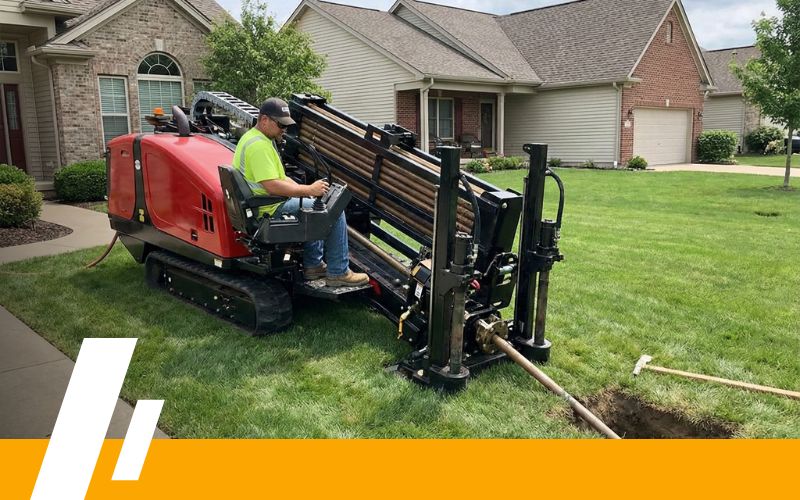
Excavation
Many conversions require excavation to establish the new sewer route.
Excavation requirements can vary dramatically between an open and easily accessible yard and a property where the route passes beneath pavement, established landscaping, steep terrain, or confined areas.
Connection to the Building Sewer
The plumbing leaving the building must ultimately be redirected from the existing septic system toward the new sewer line.
The exact connection point and configuration depend on the existing property.
Connection to the Sewer System
The new side sewer must terminate at an authorized connection to the applicable sanitary sewer system.
The required connection method should be determined from the utility's requirements rather than assumed beforehand.
Sewer Conversion Can Involve More Than Sewer Pipe Installation
One of the most important things to understand about a septic-to-sewer conversion is that the entire project may involve responsibilities outside the underground sewer installation itself.
Depending on the property and jurisdiction, additional requirements could involve:
- Sewer availability documentation
- Utility approvals
- Permitting
- Inspection requirements
- Connection or capacity charges
- Septic pumping
- Septic tank decommissioning
- Septic component removal or abandonment
- Electrical work
- Plumbing modifications
- Engineering
- Surveying
- Right-of-way work
- Traffic control
- Pavement or concrete restoration
- Landscaping restoration
- Work involving other utilities
The exact division of responsibilities should be confirmed before Dirt Cheap Sewer's scope of work is presented to the customer.
Do not assume that one contractor performs every administrative, septic, utility, restoration, or permitting component simply because those tasks are part of the overall conversion process.
A clearly defined scope helps everyone understand who is responsible for what.
Septic-to-Sewer Conversion Requirements Can Vary Across Renton

Renton properties do not all have identical sewer conditions.
A property may be within Renton city limits without necessarily having the same wastewater-service situation as another property a few streets away. Sewer availability, service districts, existing infrastructure, and connection requirements need to be checked for the specific parcel.
For properties served by the City of Renton wastewater utility, the City directs property owners seeking a new connection to request a Sewer Availability Certificate.
That certificate is important because it establishes whether sewer service is available and identifies requirements for connecting the property.
If a new individual sewer service is sufficient, the process can differ from a property where extension of a sewer main is necessary. Utility work and connections are also subject to applicable Renton permitting and inspection requirements.
The practical takeaway is simple:
Verify availability and connection requirements before designing the construction project around a nearby sewer line.
A map can help begin the investigation, but it is not a substitute for authorization from the utility serving the property.
Does the Property Need a Side Sewer or a Sewer Main Extension?
This distinction can significantly change the scope of a septic conversion.
New Side-Sewer Service
If an appropriate public sewer is already available and the utility has an authorized connection point serving the property, the project may primarily involve constructing a new private side sewer between the building and that connection.
Sewer Main Extension
Some properties may not have an immediately available sewer connection.
If public infrastructure needs to be extended before the property can connect, the project can become considerably more involved. Additional design, review, civil construction, public infrastructure, and permitting requirements may apply.
This is another reason sewer availability should be established early.
Dirt Cheap Sewer should not promise a simple private sewer installation until it is known that the property actually has an accessible and authorized sewer connection.
What Happens to the Existing Septic System?
Connecting the building to sewer does not mean the existing septic tank and other on-site wastewater components can simply be forgotten.
Existing septic systems are regulated separately from the public sewer connection, and applicable requirements need to be identified for the individual property.
The final conversion plan may need to address questions such as:
- Does the septic tank need to be pumped?
- What decommissioning procedure is required?
- Can the tank remain in place after approved decommissioning?
- Does any portion need to be removed?
- Are there inspection or documentation requirements?
- Who is authorized to perform each part of the work?
- Are there other septic components that must be addressed?
Because these requirements can change based on jurisdiction and site conditions, the correct procedure should be verified rather than generalized.
Septic-to-Sewer Connections for Renton Properties
Every conversion depends on the wastewater demand, existing system, building configuration, and utility requirements associated with that particular property.
Residential Properties
For homeowners, a conversion may arise because of septic condition, future property plans, utility availability, or a requirement identified during another project.
The goal is to understand the complete path between the home's existing building sewer and the authorized public connection.
Commercial and Multi-Use Properties
Commercial properties can introduce additional considerations related to wastewater demand, existing plumbing, site layout, parking areas, access, and utility requirements.
The project should be evaluated according to the actual use of the property rather than treated as an oversized residential installation.
What Does a Septic-to-Sewer Conversion Cost in Renton?
There is no responsible single price that applies to every septic-to-sewer conversion.
Two properties in the same general area can require very different amounts of work.
Factors that may influence the sewer-construction portion of the project include:
- Distance between the building and sewer connection
- Depth of the existing building sewer
- Depth of the public connection
- Required pipe grade
- Excavation depth
- Soil and ground conditions
- Access for excavation equipment
- Existing utilities
- Driveways and other hard surfaces
- Landscaping
- Retaining walls
- Trees and significant roots
- Right-of-way involvement
- Traffic-control requirements
- Connection configuration
- Whether a sewer main extension is required
- Surface restoration requirements
The complete conversion may also involve utility charges, permits, septic-system work, engineering, inspections, or other expenses outside the sewer contractor's quoted construction scope.
For that reason, Dirt Cheap Sewer should evaluate the property before representing what the work will cost.
A site-specific estimate is more useful than a generic online price that ignores the conditions beneath the property.
Why Talk With Dirt Cheap Sewer About a Renton Sewer Conversion?
A septic-to-sewer project needs more than someone willing to start digging.
It requires understanding the relationship between the building, existing wastewater system, proposed sewer route, connection point, terrain, utilities, and excavation conditions.
Dirt Cheap Sewer focuses on underground sewer and exterior utility work, allowing the conversation to center on the physical realities of the project.
The objective is not to recommend unnecessary work or promise a particular construction method before the property has been evaluated.
Instead, the process should answer the important questions first:
Is sewer service available? Where can the property connect? What must be installed? What obstacles exist? Which parts of the overall conversion fall within Dirt Cheap Sewer's scope?
Once those questions have dependable answers, the property owner can make a much more informed decision about moving forward.
Looking for Other Sewer Services in the Area?
Visit the Renton sewer and outdoor plumbing services page to explore Dirt Cheap Sewer's other services available for local property owners.
Frequently Asked Questions About Septic-to-Sewer Conversion in Renton
Possibly, but sewer availability needs to be verified for the individual property. If the City of Renton is the wastewater provider, its Sewer Availability Certificate process can establish whether sewer service is available and identify connection requirements. A sewer line appearing nearby does not by itself guarantee that a property has an approved connection.
No. The existing septic system may have separate decommissioning, pumping, inspection, or documentation requirements. Those requirements should be confirmed with the appropriate authority before the project scope is finalized.
Utility connections are subject to permitting requirements. For City of Renton wastewater service, the City requires utility permitting for sewer connections and directs new-service applicants through its sewer-availability and Development Engineering process. The exact permits needed depend on the scope of the project.
Dirt Cheap Sewer can help evaluate the physical property and proposed sewer work, but official sewer availability and connection authorization should come from the utility responsible for serving the parcel.
There is no universal project duration. Timing can depend on sewer availability, design requirements, permitting, inspections, septic-system requirements, utility coordination, excavation conditions, connection complexity, and the amount of restoration involved. A schedule should be discussed after the actual scope is known.
Some sewer projects can use less-invasive construction techniques, but a new connection commonly requires access at multiple locations and may require excavation along at least part of the route. The appropriate construction method depends on the site's existing infrastructure and conditions.
Cost varies substantially by property. Distance to the connection, sewer depth, excavation, access, grade, surface improvements, permits, utility charges, septic decommissioning, and whether a sewer-main extension is necessary can all affect the overall investment. The property should be evaluated before relying on a project price.
Discuss a Septic-to-Sewer Conversion in Renton
If you are considering moving a Renton property from septic to public sewer, begin by finding out what the property actually requires.
Dirt Cheap Sewer can evaluate the underground sewer portion of the project, discuss potential routing and excavation conditions, and help define the work that may be necessary to establish a new sewer connection.
If you already have information from the City, utility provider, septic professional, or another agency, have it available during the conversation. Useful information may include:
- Sewer Availability Certificate
- Utility correspondence
- Septic inspection findings
- Existing septic records
- Site plans
- Sewer maps or connection information
- Building or development plans
- Previous excavation or utility information
The more that is known about the property, the easier it is to separate assumptions from actual project requirements.